Because layout, slotting, pick logic, and labor interact under real variability, and a fix aimed at the visible symptom sends the constraint somewhere else. A building that can't keep up looks like a space problem. Most of the time the space is fine, and the flow is what's losing the throughput.
You've probably already run the elimination everyone runs. Each pass is competent, and each one dead-ends the same way.
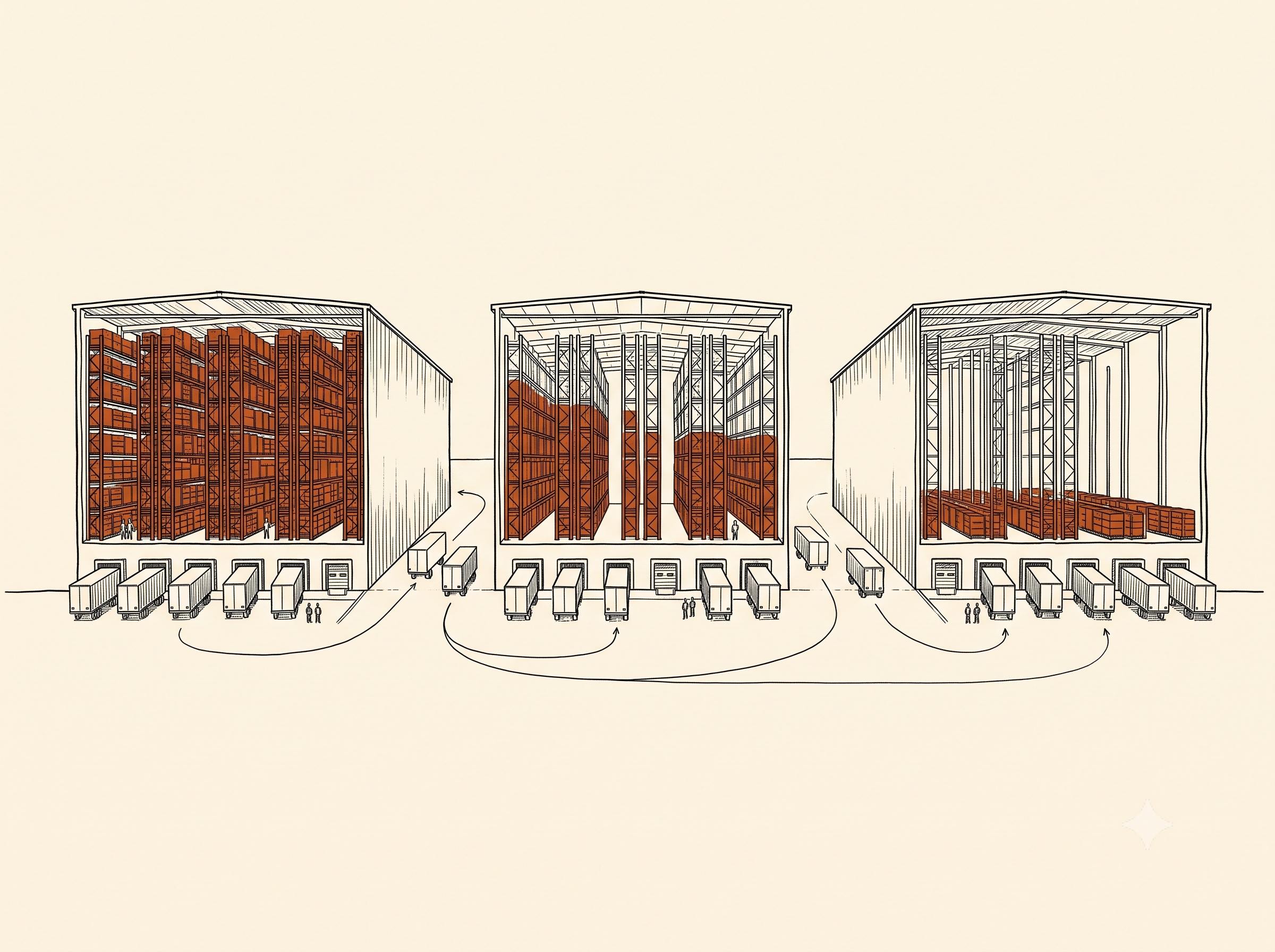
Is it one building?
One site runs 50 cases an hour and a sister site runs 30, on the same equipment and the same process. Benchmarks can tell you the gap exists. They can't tell you whether it's the layout, the mix that building is handed, or the volume it carries, because a benchmark compares outputs and the answer lives in the interactions.
Is it one shift?
Day shift outproduces nights, or the other way around, and the handoff window quietly eats half an hour of every changeover. Comparing shifts fairly is nearly impossible from reports alone, because no two shifts are handed the same work.
Is it one step?
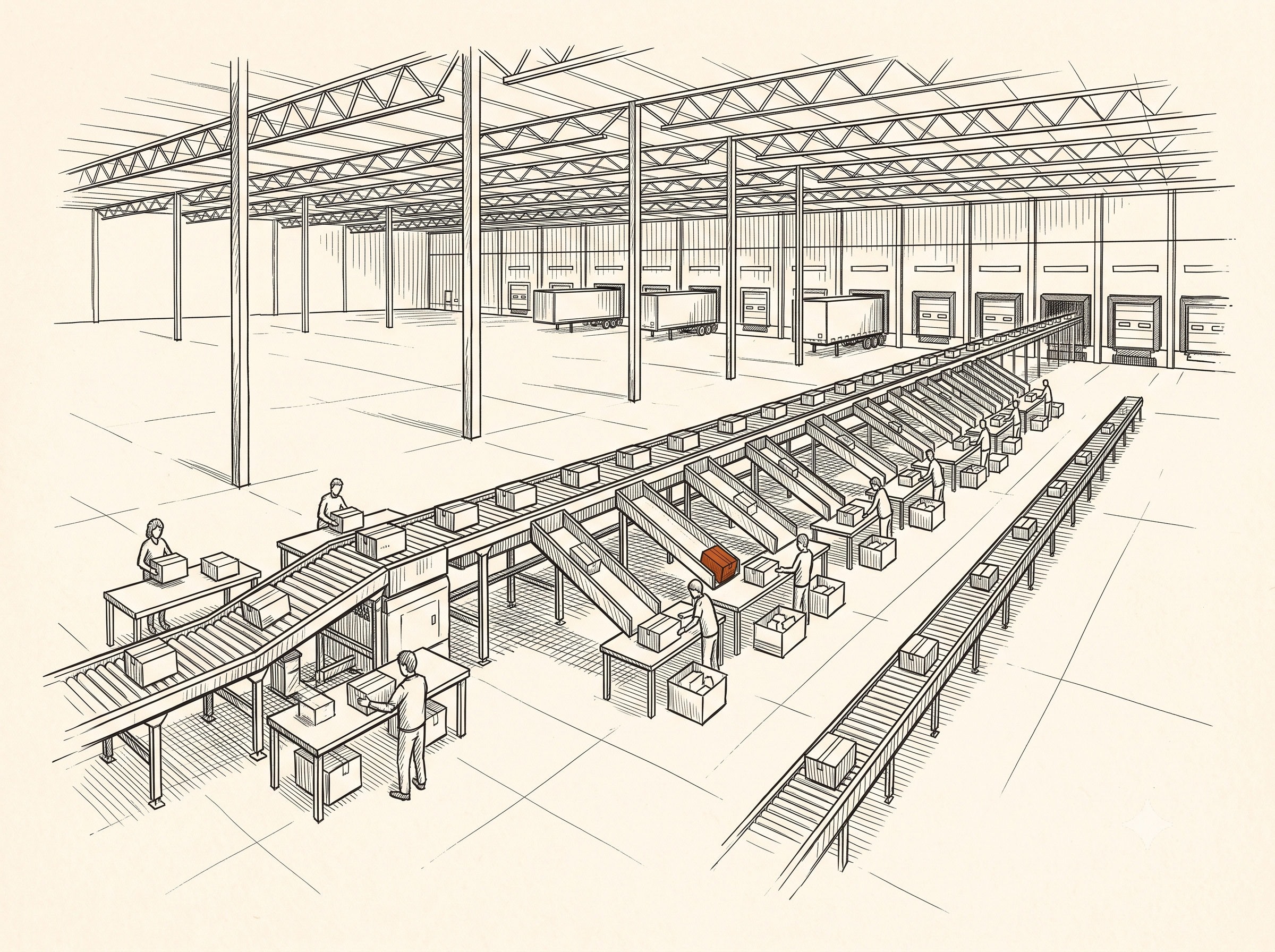
Picking looks slow until you notice the pickers waiting on replenishment. The fastest pickers post the most errors, and the rework lands downstream where nobody logs it. Standing and watching a process for fifteen minutes is a genuinely good technique, and it still can't see receiving, putaway, picking, packing, and shipping interact across a whole day.
Did something change, or is it the data?
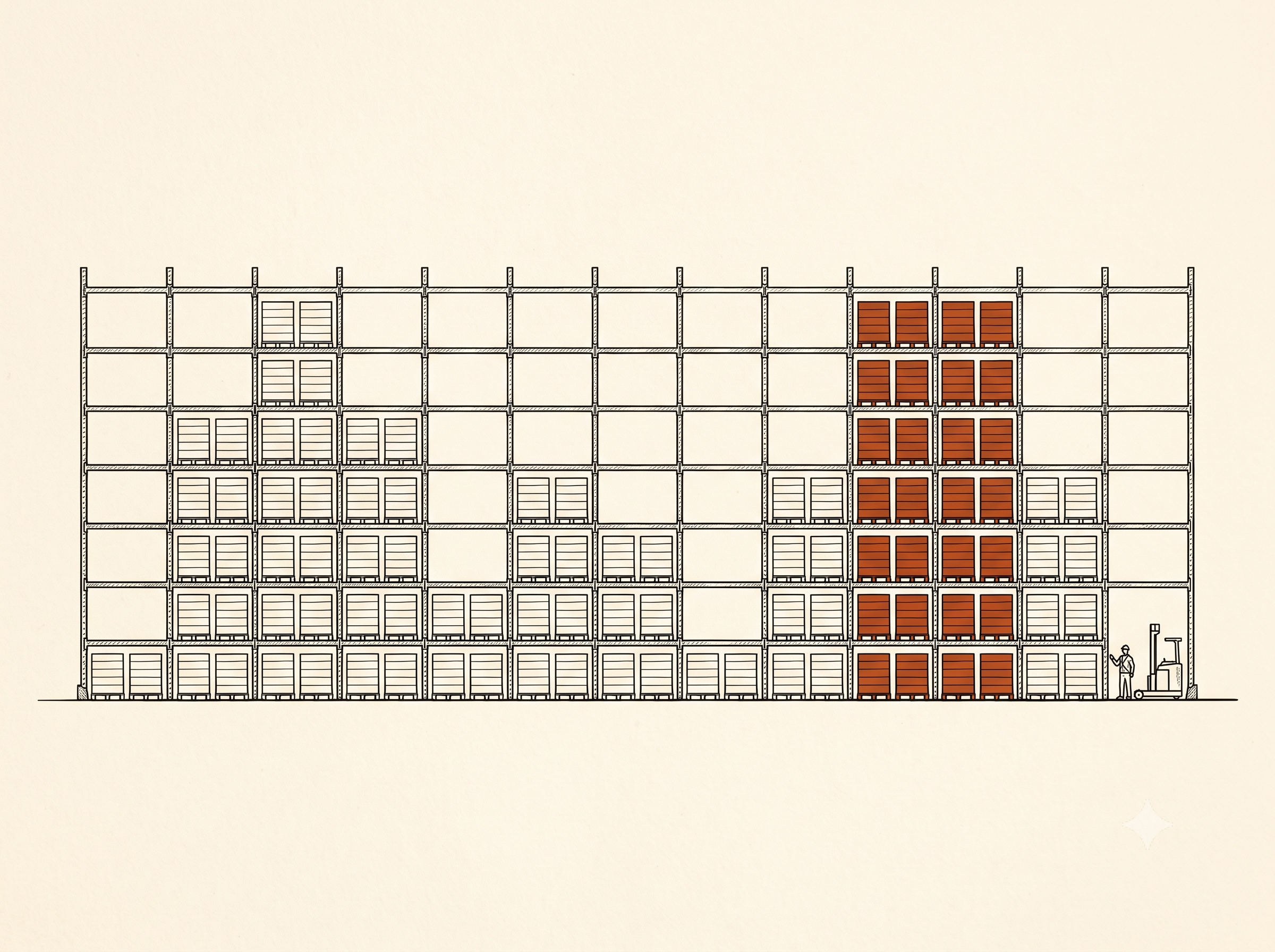
Sometimes the trigger is real: a new layout, a new process, growth. Sometimes the stock is technically in the system and physically somewhere else, and the throughput problem you're chasing is really a data gap. Telling those apart from the numbers alone is close to impossible.
Is it the people, or the process making them slow?
Here's the question underneath all the others, and the one nobody wants to say out loud. A model of the building answers it without pointing at anyone: it shows what the flow does to the people inside it. That's usually the answer the team was hoping someone could prove.