Inventory Staging

Inventory keeps climbing, and you're still short on the items customers want.

The problem isn't how much you hold. It's where it sits, and whether your policies were ever tested against how demand and supply actually behave.

Stop setting policy from averages and defending it after the next shortage. See how your network behaves under real conditions, and stage the stock where it holds service when demand shifts.

Sound familiar?

Inventory keeps climbing, and you're still short on what customers want

You're buffering against unreliable suppliers, and still getting caught

Stock expires before it sells, and the write-offs keep coming

Critical spare parts run out, and equipment goes down

Every site protects itself, and no one sees the whole network

  • Inventory keeps climbing, and you're still short on what customers want
  • You're buffering against unreliable suppliers, and still getting caught
  • Stock expires before it sells, and the write-offs keep coming
  • Critical spare parts run out, and equipment goes down
  • Every site protects itself, and no one sees the whole network

How can we have so much inventory and still be short?

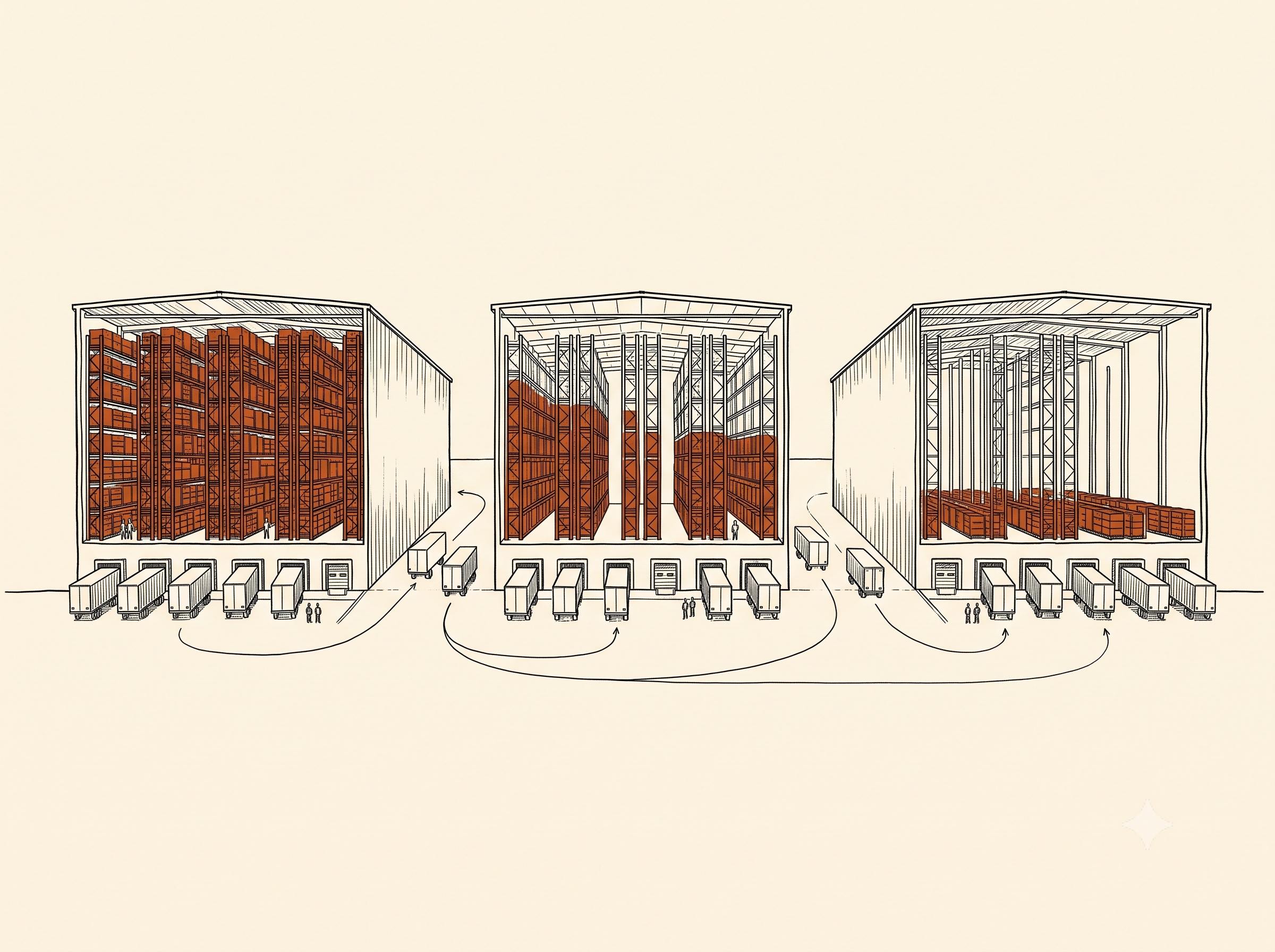
The number isn't the problem. Most planning sets one safety stock figure per item from an average. Real demand arrives in bursts, and a single event can drain several items at once. The average smooths over exactly the behavior that causes the shortage. Your planners already sense this, which is why they override the system by hand even when they can't prove it wrong. So the real question isn't how much each item needs. It's how your network behaves under real demand, and where inventory has to sit to hold service through it.

SAME SAFETY-STOCK POLICY · TWO VIEWS OF DEMAND

The average is lying to you

ON HAND / DEMAND SAFETY STOCK TIME →

Same policy. Two views of demand. The gap is the shortage.

How SimWell solves it

A planning tool gives you a number. Talented people give you their best call. Neither one shows you where you'll come up short.

The work starts the same way every time: a model of your real demand patterns, the way your network interacts tier to tier, and the rules your planners actually follow. Run it across hundreds of scenarios and it returns a tested performance profile, not a single optimal number, on your own data. You see your current policy beside an optimized one, total inventory down with service held or improved, and the model still holding when a disruption hits: a demand spike, a supplier delay.

Who builds it and who runs it depends on where you're starting from. Either way you keep a decision model your planners use as part of normal planning, not a report that sits on a shelf.

How we engage

Where you start depends on what you already know

Four ways in. You pick the one that matches where you are, not a track you have to walk from the beginning.

  1. You're not sure which staging decision to attack first

    Decision workshop. A focused session that surfaces and ranks the decisions where simulation pays off first: dock scheduling, staging footprint, put-away sequencing, slotting, or labor balance. You leave knowing which one to model, why it ranks where it does, and what it takes to answer it.

  2. You know the decision, and you want it answered once

    Scoped project. You bring the specific question: how much staging space you need, where to hold inventory before put-away, or what breaks when volume spikes. We handle discovery, build, and validation on your data. You keep the model and the answer, inside your environment.

  3. You know the decision, and you want your own team to own it

    Licensing and training. We license the right tools and train your network planners and analysts to build and run the models in-house. The capability becomes yours rather than something you keep buying.

  4. The decision comes back every cycle

    Managed services. Sourcing shifts, tariffs move, customers change what they buy, and a model built once goes stale. We maintain and evolve the models alongside your team, so scenario runs become part of how the network plans, season after season.

What every path leaves behind

Whichever way you come in, the model, the logic, and the staging capability stay inside your organization, documented and maintainable, so your team keeps answering its own staging questions long after the work is done.

Resources

More on inventory staging

www.simwell.iohubfsSortation-Conveyor_300x175
Article

Transforming Your Demand Forecasting and Inventory Management

Overstock ties up capital and stockouts cost sales. See how simulation turns reactive forecasting into scenario-tested planning that holds the right inventory levels through demand swings.

Read more →
Flexsim_screenshot
Article

What You Need to Know About Inventory Optimization

Demand surges, competition, and the limits of spreadsheets wreck inventory balance. Walk through the four challenges that break traditional methods and the modeling approach that keeps supply matched to demand.

Read more →
Screenshot 2026-02-25 at 3.10.53 PM
Article

How to Minimize Risk in Your Supply Chain

Supplier failures create weak links you cannot see. Learn how simulation lets you test thousands of scenarios and find risks before they hit.

Read more →

Get started

Your inventory sits where the averages put it.

The fastest way to know whether inventory placement is your real lever is to put your own data in front of the question. Book a call and we'll tell you straight.