INDUSTRIES

Healthcare

Find out whether more beds move the wait or only move where people wait, before the capital is committed. Test the escalation plan against a bad flu week while there is still time to change it. Build the staffing model against the demand that shows up rather than the demand that was forecast. SimWell builds working models of how your operation behaves, so the hardest calls get made on evidence instead of conviction.

Healthcare_hero_1

The gap between the data and the decision

No one can make the call.

You have more data than any other operation of comparable size. Arrival volumes by hour, length of stay by service line, case durations by surgeon, and a capacity study everyone in the room has read twice. Volumes climb on a curve nobody is going to reverse, and the decision is no closer to made than it was two budget cycles ago.

A hospital runs on schedules that no single person holds. Surgeons book block time months ahead; the emergency department takes whoever arrives in the next four hours; a discharge waits on a physician round, then on a bed in a facility the hospital does not own. Each of those clocks belongs to a different leader, measured against a different target, reported in a different meeting. Add volume and none of it absorbs the way the capacity plan assumed, because every department was sized against its own demand rather than against the patient who crosses all of them.

Inside that reality, four patterns keep surfacing:

The operation

The room can't converge.

The emergency department is boarding, so the emergency department raises it, and the physicians watching patients hold on stretchers are not wrong about what they see. Inpatient can show that discharge orders cleared before noon and the beds sat clean and empty by two. Every reading holds up under questioning, the capacity request goes back for another round of analysis, and the boarding hours sit exactly where they were.

Nobody trusts the number.

The projected impact of the new unit comes from a planning model that assumes arrivals hold their pattern, procedures run to their scheduled length, and the unit opens fully staffed. Your hospital has never had a year like that. Everyone in the room knows the number is optimistic and nobody can say by how much, which leaves an argument about a figure that cannot be tested and a decision that cannot be defended to the board.

The tools show a snapshot.

Midnight census, the throughput dashboard, the length-of-stay report that ties out on the quarter. What the decision needs is the hospital in motion: how far the census climbs before the escalation tier trips, how long the operating rooms keep running once recovery has no free bay. A report holds one state of the hospital at a time, and the problem lives in the transitions.

The capability lives in one person.

One analyst in decision support builds the models everyone asks for, and each new scenario costs days of their time. The questions keep arriving: every bed request, every block time proposal, every what-if the executive team raises after a bad week. The queue grows faster than the desk clears it, and the analyst is one resignation away from taking the capability with them.

And it lands on you

The weight lands on one desk.

Someone signs the capital plan for the tower. Someone approves the staffing model and the agency spend sitting behind it. The whole chain of interactions sits behind that name, priced in capital committed for a decade, in patients who wait, and in staff who leave over a schedule that looked reasonable on paper. What none of the material in the room can show is where each option ends up, and the signature is due first.

The decisions healthcare leaders own

Six decisions that constrain each other, which is exactly why they're hard to make one spreadsheet at a time.

None of these decisions arrives alone. Where the constraint actually sits decides whether more beds are worth building. What the beds relieve decides how much the staffing model has to absorb. The staffing model decides what a surge costs you, and the surge profile decides how much of the winter plan survives contact with a bad February.

SimWell organizes its work around all six.

Throughput & bottlenecks

Where the constraint really is, and what will move it, before spending to fix the wrong thing. The department that visibly backs up is usually reporting a constraint that sits somewhere else: emergency boarding is often a discharge decision made on an inpatient unit four floors up. The place everyone watches fill up is the symptom the organization has learned to point at.
Staffing & scheduling

How many nurses and support staff are needed, on which units, in which skill mix, on which shift pattern, to hold care standards through a winter without spending the year's agency budget by March, including the coverage that has to hold when three people call in on the same evening.

Capital & capacity

Whether to build, buy, or expand, and how much capacity to put in place for the years ahead. Beds, operating rooms, imaging suites, a new tower: commitments that gate service growth for a decade and rarely come back cheaply once the ground is broken.

Contingency & risk

What breaks when a flu season runs long, a unit closes for remediation, or a mass casualty event arrives, and what the response should be before it happens on the floor. Escalation plans exist in every hospital; few have been tested against the conditions that trigger them, which is how a plan that reads well in October fails in January.

Routing & dispatch

How transport teams, porters, sterile processing runs, and community care visits get assigned when demand moves by the hour and a delay in one corridor surfaces as a canceled case somewhere else. Assignment rules decide whether the beds you already have turn fast enough to matter.

Network & footprint

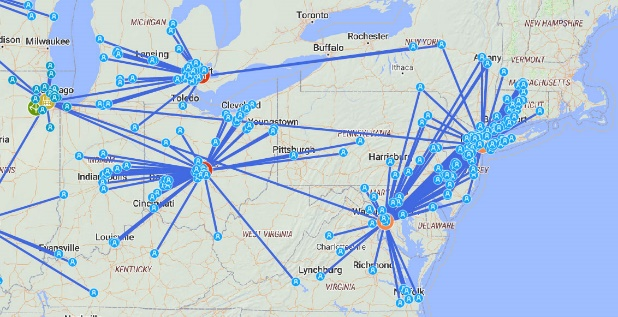
Which sites in the system carry which service lines, and where capacity should sit across them. Whether consolidating a service relieves pressure or moves it to a campus that was already running full, which is rarely the answer the standalone business case assumed.

Why the current approach stalls out

The average patient does not exist.

None of this is a criticism of how hospitals are run. Census reporting, capacity huddles, staffing grids, and decision support teams do exactly what they were built for. The decisions on this page ask a different question: what the system will do once you change part of it, and answering that means carrying the timing, the queuing, and the way a delay in one department surfaces as a canceled case somewhere else six hours later. No static report was built to carry that.

Average the year and you plan for a year the hospital has never had. Arrivals cluster instead of spreading, procedures run long more often than short, and acuity moves with the season while the schedule stays where the grid put it. None of that shows up as a gradual decline. The hospital absorbs the first shortfall and the second, and then one evening a closed unit tips the census into escalation and every department downstream inherits a backlog it did not create.

WHAT SIMWELL BUILDS

We build decision systems.

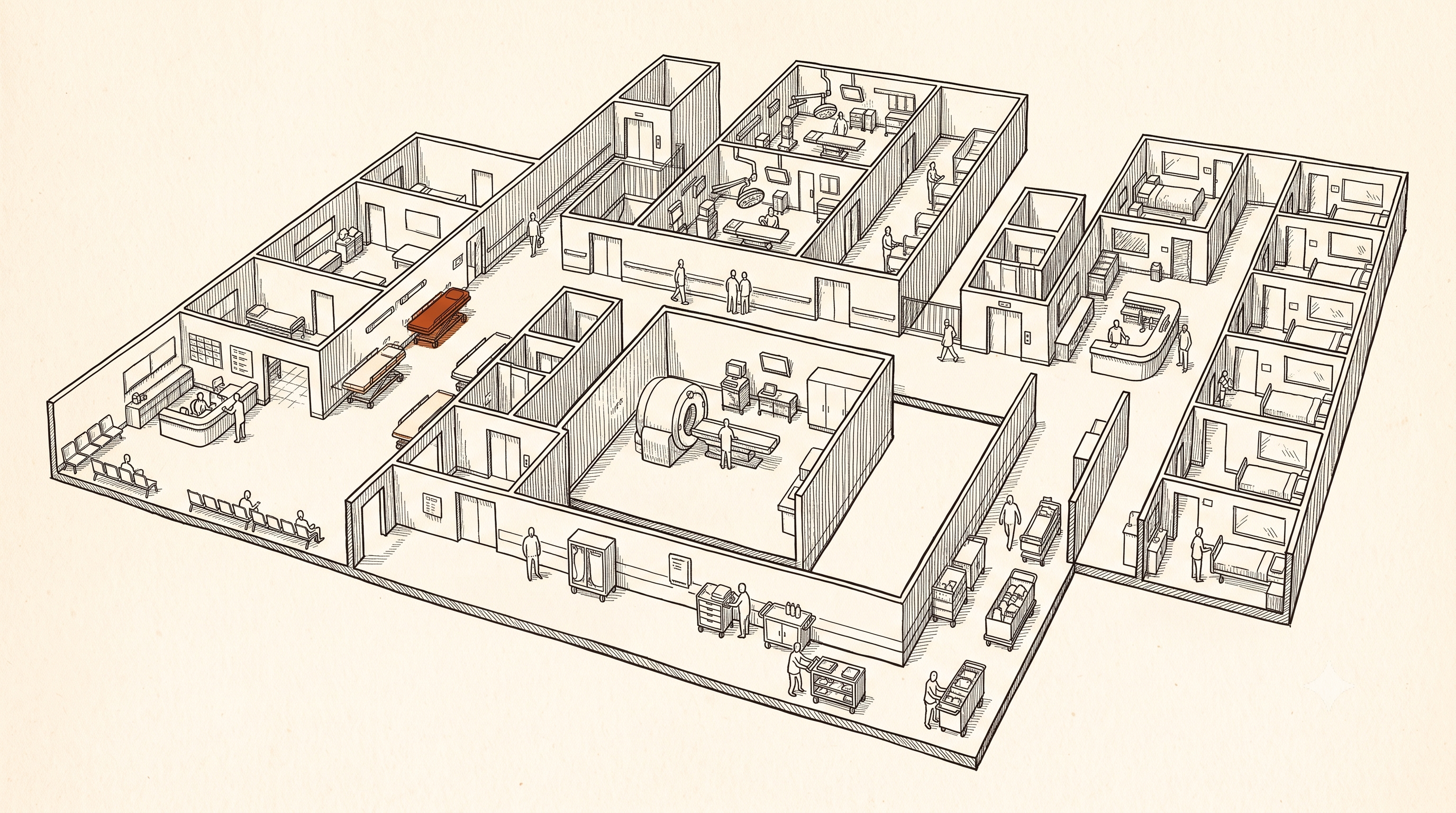
The core of one is a working replica of your hospital, validated against how it actually runs and carrying the behavior a monthly report averages away: arrivals that cluster, procedure times that overrun, a discharge waiting on a round and then on a bed in a building you do not control, imaging and transport serving four departments that each planned as though they had them. Every option gets run through it, and the consequences surface while the capital and the schedule are both still open.

A single model settles the question in front of you now. The next budget cycle brings another one, and the cycle after that brings a third, which is why the work is built to be run again rather than delivered once: your people open it, change the assumptions, and read what comes back. Your team runs it, reads the results, and makes the call. Nothing here replaces the systems you already run, and the capability stays in the building once the engagement closes.

PROOF

Decisions made on evidence, not conviction.

Case study thumbnail — placeholder, pending ProcSim

CASE STUDY

[Headline: the decision, stated as the reader's own question.]

Lorem ipsum dolor sit amet, consectetur adipiscing elit, sed do eiusmod tempor incididunt ut labore et dolore magna aliqua. Ut enim ad minim veniam, quis nostrud exercitation ullamco laboris nisi ut aliquip ex ea commodo consequat. Duis aute irure dolor in reprehenderit in voluptate velit esse cillum dolore eu fugiat nulla pariatur. Excepteur sint occaecat cupidatat non proident, sunt in culpa qui officia deserunt mollit anim id est laborum. Sed ut perspiciatis unde omnis iste natus error sit voluptatem accusantium doloremque laudantium, totam rem aperiam, eaque ipsa quae ab illo inventore veritatis et quasi architecto beatae vitae dicta sunt explicabo.

Read the case study
Case study thumbnail — placeholder, pending ProcSim

CASE STUDY

[Headline: the decision, stated as the reader's own question.]

Lorem ipsum dolor sit amet, consectetur adipiscing elit, sed do eiusmod tempor incididunt ut labore et dolore magna aliqua. Ut enim ad minim veniam, quis nostrud exercitation ullamco laboris nisi ut aliquip ex ea commodo consequat. Duis aute irure dolor in reprehenderit in voluptate velit esse cillum dolore eu fugiat nulla pariatur. Excepteur sint occaecat cupidatat non proident, sunt in culpa qui officia deserunt mollit anim id est laborum. Nemo enim ipsam voluptatem quia voluptas sit aspernatur aut odit aut fugit, sed quia consequuntur magni dolores eos qui ratione voluptatem sequi nesciunt.

Read the case study
Case study thumbnail — placeholder, pending ProcSim

CASE STUDY

[Headline: the decision, stated as the reader's own question.]

Lorem ipsum dolor sit amet, consectetur adipiscing elit, sed do eiusmod tempor incididunt ut labore et dolore magna aliqua. Ut enim ad minim veniam, quis nostrud exercitation ullamco laboris nisi ut aliquip ex ea commodo consequat. Duis aute irure dolor in reprehenderit in voluptate velit esse cillum dolore eu fugiat nulla pariatur. Excepteur sint occaecat cupidatat non proident, sunt in culpa qui officia deserunt mollit anim id est laborum. Neque porro quisquam est, qui dolorem ipsum quia dolor sit amet, consectetur, adipisci velit, sed quia non numquam eius modi tempora incidunt ut labore.

Read the case study

HOW ENGAGEMENTS BEGIN

One decision, bounded scope, sized to the window the decision actually has.

  1. 01

    Frame the decision.

    The single call you have to make, the options genuinely on the table, the limits that actually bind, and the measures the room will judge against. If a model won't help, you hear that here, before anyone scopes anything.

  2. 02

    Build and validate the model.

    Scope follows the decision, and the build starts from records the hospital already keeps. You do not need a clean data warehouse to begin. A first pass runs on admission and discharge feeds, case logs, staffing schedules, arrival histories, and the rules your charge nurses can state from memory, and building it shows which of the remaining data gaps are worth the effort to close. Your operations leads and clinical managers walk the logic as it comes together, until the model backs up, escalates, and recovers the way the hospital does.

  3. 03

    Deliver the decision package.

    Scenario results, the trade-offs written down, every assumption stated in the open, and a model your team keeps. You see the logic and the assumptions the whole way through, and we read the results with you instead of handing down a verdict, so what you carry into the board meeting survives questioning line by line.

WHY SIMWELL

Plenty of firms can build a model. Fewer can build one that holds up inside a real operation.

The modeling bench here is one of the deepest anywhere. What decides whether a hospital model is worth anything is whether it carries the calls that actually run the floor: which patient the charge nurse moves when two arrive at once, what the house supervisor does at nine at night when the last clean bed goes, why the evening shift handles the same situation differently than the day. Policy documents carry the sequence. Those calls carry the results, and the model gets built from them, which is why it stays recognizable to the manager who has to live with the answer.

WHO THIS IS FOR

A decision this cycle where the downside is real.

A decision this cycle where the downside is real: a capital plan for beds that may not move the wait, a staffing model going live against a winter nobody has tested it on, a service consolidation sized against demand the receiving campus has never absorbed. If a capacity study or a spreadsheet already lost this argument once, start with that one.

Discuss the decision

Bring one question. If modeling can support a defensible commitment, we'll show you the smallest scope that gets you there. If a model won't help, you'll hear that in the first call.

Start a conversation

RESOURCES

More on the decisions healthcare leaders own.

eBook

Strategic questions that improve flow, staffing, and scheduling

Eight questions healthcare leaders bring to a model, and what each one takes to answer.

Download the guide
SimWell Decision Intelligence Capabilities eBook cover

eBook

SimWell Decision Intelligence Capabilities

The full picture of how SimWell turns operational questions into decision-ready answers.

Download the guide
Improving patient flow amidst staff shortages and rising demand

Blog

Improving patient flow amidst staff shortages and rising demand

Why flow problems resist a single fix when constraints, variability, and interactions all move at once.

Read the post

eBook

Testing the escalation plan: what a surge does to a hospital that has never modeled one

How escalation tiers behave under sustained rather than single-day pressure, where capacity actually runs short across emergency, critical care, and inpatient units, which spaces get converted and at what cost to the schedules that were using them, and which mitigations have to be pre-positioned rather than decided in the moment.

Download the guide