INDUSTRIES

Manufacturing

Find the bottleneck before you buy the machine. Know whether the floor can deliver before you promise the order. Prove the order book stays feasible past the quarter the planning system can see. SimWell builds working models of how your operation behaves, so the hardest calls get made on evidence instead of conviction.

Man_hero

The gap between the data and the decision

No one can make the call.

You have the production schedule. You have the routings, the changeover matrices, the machine history, the order book that runs years out. A customer wants an answer on next November before the week is out, and no one can make the call.

The plan says one thing and the floor does another. The order book runs years out while the planning system sees three months, so a promise gets made against a schedule no one has tested past the quarter. Planners can feel when a plan is fragile, but they have no way to show it. So the consequences stay invisible until after the commitment: the machine is bought and the new capacity fights the workflow around it, the expansion lands on a stage the floor never waited on, the order is promised for a date the floor can't hold.

Inside that reality, teams get stuck in familiar ways:

The operation

People can't agree.

Planning says the order fits. Operations says the floor won't hold it. The account team already hinted to the customer that it would. Each read is honest, each points at a different number, and the view that would settle it, what the whole floor does once the order goes in, does not exist. The commitment stalls while the customer waits.

The tools show a snapshot.

The schedule in the ERP, the throughput report from last month, the capacity calc in Excel. What you need is what happens next: where the constraint moves once a new machine goes in, what one demand surge does to the queue between cells. The ERP generates requirements three months out. The question the floor is asking runs years past that.

The capability lives in one person.

An in-house expert builds a simulation that works, covering one production cell. Run times climb as the model grows, and the architecture can't carry the other cells the floor depends on. The capability sits with one person, and the questions arrive faster than that setup can answer: every line expansion, every capital cycle, every new order that reopens the plan.

Nobody trusts the number.

Planners can feel when a plan is fragile, and they have no way to prove it. Leadership asks whether the plan will hold, and the honest answer is "we think so." Outsourcing calls, labor commitments, and delivery promises worth millions ride on that, and no one can point to the run behind it.

And it lands on you

The weight lands on one desk.

Someone signs the equipment capital or approves the line expansion. Every interaction between the cells, every commitment already made to a customer, every week the mix could turn, all of it rides on that signature, and nothing exists to show the room what each option sets in motion before the signature.

The decisions manufacturing leaders own

Six decisions that constrain each other, which is exactly why they're hard to make one spreadsheet at a time.

None of these decisions arrives alone. The capacity you install fixes what the floor can run. The floor's throughput sets what the order book can promise. The commitments you make decide whether the schedule buffers a bad week or overloads it, and the maintenance plan decides whether the line that cleared every review still hits its rate on the floor.

SimWell organizes its work around all six.

Capital & capacity

Whether to build, buy, or expand, and how much capacity to put in place for the years a line or plant runs. A new machine replaces one that ran for decades, and the payback turns on how the added capacity meshes with the workflows already on the floor, which is exactly the interaction a capacity calc leaves out.
Network & footprint

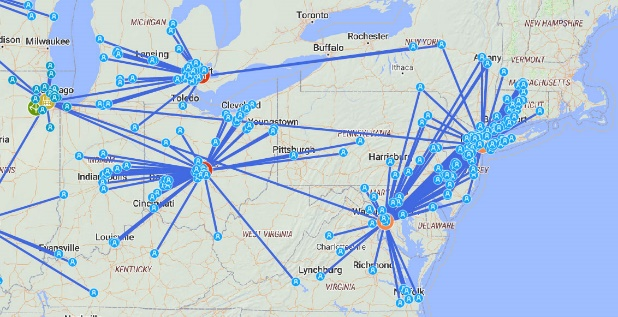
Where production, inventory, and distribution sit, and how material and product flow across a multi-site network. Which plant makes which product family, how work is allocated across sites, and whether an onshoring or consolidation move holds up once the flow between facilities is accounted for.

Routing & dispatch

How to sequence jobs, assign work to cells, and route product across the floor when mix, changeovers, and demand shift by the shift. Job sequencing, line assignment, changeover order, and the load pattern that decides how much the floor clears in a day.

Throughput & bottlenecks

Where the constraint really sits between raw material and the loading dock, and what will move it, before spending on the wrong fix. One manufacturer was sure its shipping throughput hinged on how playgrounds were loaded into a trailer, and the runs showed load sequence changed nothing; the real lever was whether a product line shipped in a crate a lift truck could handle or got carried by hand at the customer site.

Staffing & scheduling

How many crews are needed, in which roles, on which shifts, to hold output through the demand peak and the maintenance window while keeping labor, one of the biggest costs a plant can control, from running ahead of the work. When a labor commitment or an outsourcing call worth several million rides on a plan, the model shows whether the crew mix holds when a machine drops mid-shift and the changeover-heavy weeks stack up, before anyone signs for the headcount.

Contingency & risk

What breaks when a machine fails, a supplier misses, a demand surge lands, or a new commitment reopens the plan, and what the response should be before it happens on the floor.

Why the current approach stalls out

A plan that clears the annual review comes apart the morning a rush order lands on a line already running near capacity.

None of this says plants are run badly. Production schedules, historical rates, engineering judgment, and spreadsheets built up over years keep the daily operation moving, and they earned their place. The decisions above pose a harder question: what the whole floor will do once you change it. Answering it means carrying the variability, the maintenance, and the way cells, lines, and sites push on one another, and a single-year rate in a spreadsheet was never meant to hold that.

Average a year of output and you get a year no plant ever lived through. Operators adjust for material and quality, machines fail on their own schedule, mix shifts, and a station that carried the load last quarter becomes the one everything waits on. A tool anchored to the mean shows the plant on a day it rarely has. The trouble collects at the edges, in the surge and the week two problems arrive together.

WHAT SIMWELL BUILDS

We build decision systems.

At the center is a running replica of your floor, checked against the operation itself and built down to the rules your reports smooth over: how jobs get sequenced and how changeovers stack up, how the four cells hand work to one another, how each machine behaves, how planned and unplanned maintenance fall against your own history, and how a delay at one station reaches the stations that feed off it. You push each option through it and see what that option does to the whole floor before a dollar of capital moves.

Ask the question once and the model answers it. Turn the model into a system and the answer is waiting the next time the question comes around: the next line expansion, the next capital cycle, the next order that reopens the plan. Your engineers drive it, read the runs, and own the call. It sits on top of the tools you already run, and the capability stays with your team after we leave.

PROOF

Decisions made on evidence, not conviction.

man1

CASE STUDY

Can you take this order for next November?

A vertically integrated manufacturer held an order book years out while its planning system generated requirements three months ahead. When a customer asked whether a new order fit, planners could describe what the plan said and had no way to show what the plan would do.

Read the case study
man2

CASE STUDY

Where is the constraint, and what actually moves it?

A recreational equipment manufacturer facing rising demand assumed its shipping constraint came down to how playgrounds were sequenced into a shared trailer. Monte Carlo runs showed load sequence had no effect on trailers per day.

Read the case study
man3

CASE STUDY

What happens when the model stays?

A North American manufacturer running 12+ facilities and thousands of SKUs went in skeptical, having hired analytics teams before that scoped a question, delivered a report, and left. SimWell started with one pilot and stayed. One cycle surfaced $20M+ in annual profit that sat outside anyone's original scope.

Read the case study

HOW ENGAGEMENTS BEGIN

One decision, bounded scope, sized to the window the decision actually has.

  1. 01

    Frame the decision.

    One decision, the options on the table, the constraints that bind, and the criteria the room will judge by. If a model won't help, you hear that here, before anyone scopes anything.

  2. 02

    Build and validate the model.

    We build a right-sized model against the data you have. Perfect data is never the entry requirement; the first pass runs on your routings, changeover matrices, machine history, and the order book your team already trusts, and the model itself surfaces which data gaps matter enough to close. Your engineers review the logic as it takes form, so the operation in the model behaves like the one they run.

  3. 03

    Deliver the decision package.

    Scenario results, documented trade-offs, stated assumptions, and a model your team keeps. Model logic and assumptions stay visible throughout, and results are reviewed together rather than delivered as conclusions, so the recommendation you carry to a board or a capital committee is one you can defend line by line.

WHY SIMWELL

Plenty of firms can build a model. Fewer can build one that holds up inside a real operation.

SimWell fields one of the deepest simulation benches in the business, and many of its consultants ran production floors and sat in planning rooms before they ever modeled one. They have watched a plan sail through every capital review and still miss its numbers once the floor got hold of it, so they model for the floor first. The experience runs from a single production cell to networks of a dozen plants carrying thousands of SKUs, which is why the model behaves like the plant your team walks every day.

WHO THIS IS FOR

A decision this cycle where the downside is real.

A decision this cycle where the downside is real: capital committed to equipment that has to earn back over a decade, a delivery date promised before anyone proved the floor could hold it, a constraint that moved to a new station the week after the spend cleared. When a spreadsheet or an outside study has been through the argument once and left it unsettled, this is the work that settles it.

Discuss the decision

Bring one question. If modeling can support a defensible commitment, we'll show you the smallest scope that gets you there. If a model won't help, you'll hear that in the first call.

Start a conversation

RESOURCES

More on the decisions manufacturing leaders own.

MA_24Q_DownloadNow

EBOOK

24 Strategic Questions to Ask Before Investing in Manufacturing Simulation

Twenty-four questions to work through before you commit to a manufacturing simulation, covering scope, data, and who owns the model after.

Download the guide
Illustration representing capacity planning in manufacturing

BLOG

5 Ways Traditional Capacity Planning Tools Fall Short

The points where spreadsheet and static capacity tools stop tracking the floor, and what a running model of the plant shows once they do.

Read the article
Illustration representing onshoring and manufacturing network changes

BLOG

The Top 3 Onshoring Challenges and How to Solve Them

What reshoring and nearshoring change across a production network, and how to test the move on a model before the capital goes down.

Read the article