Capital & capacity
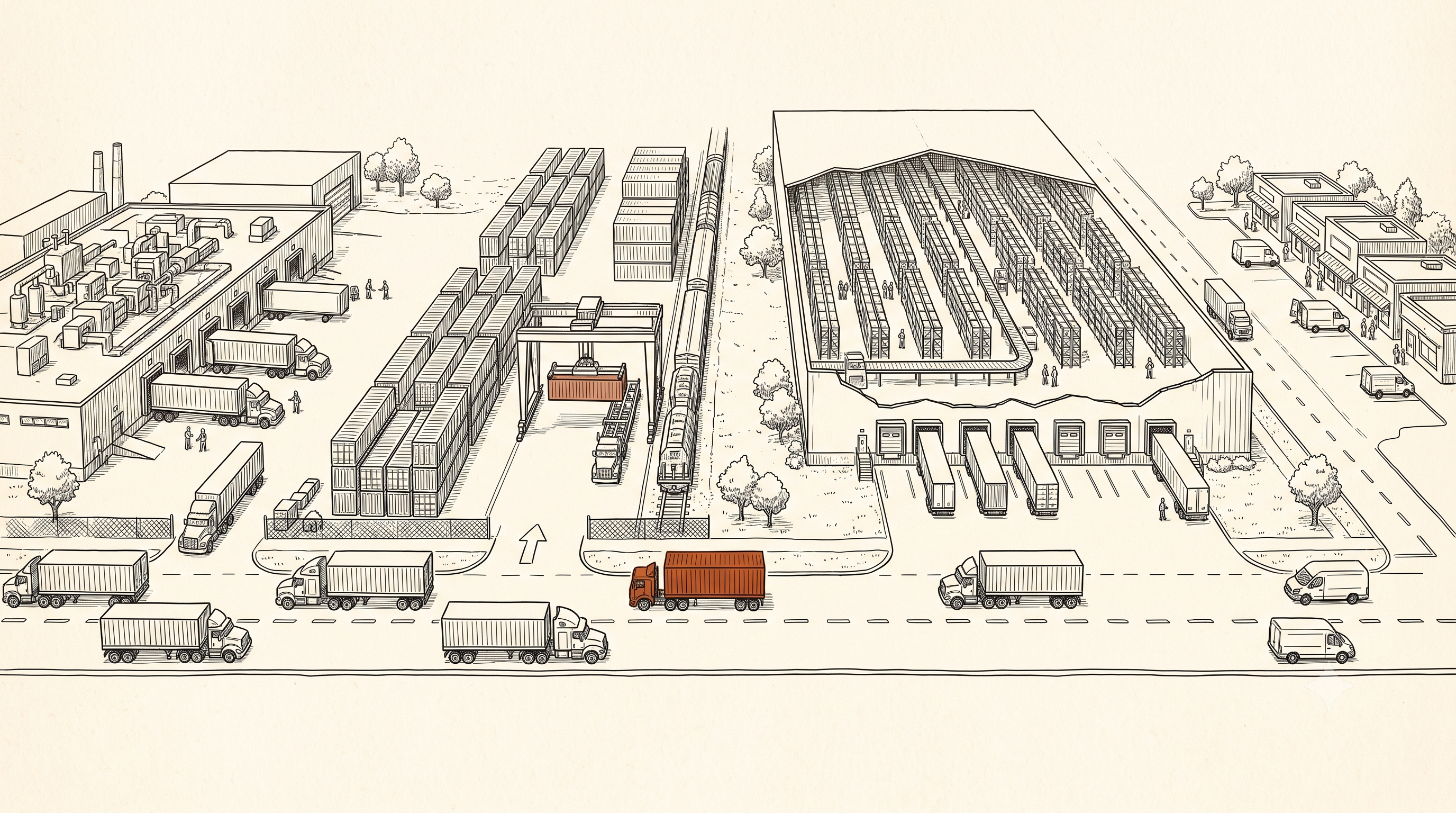
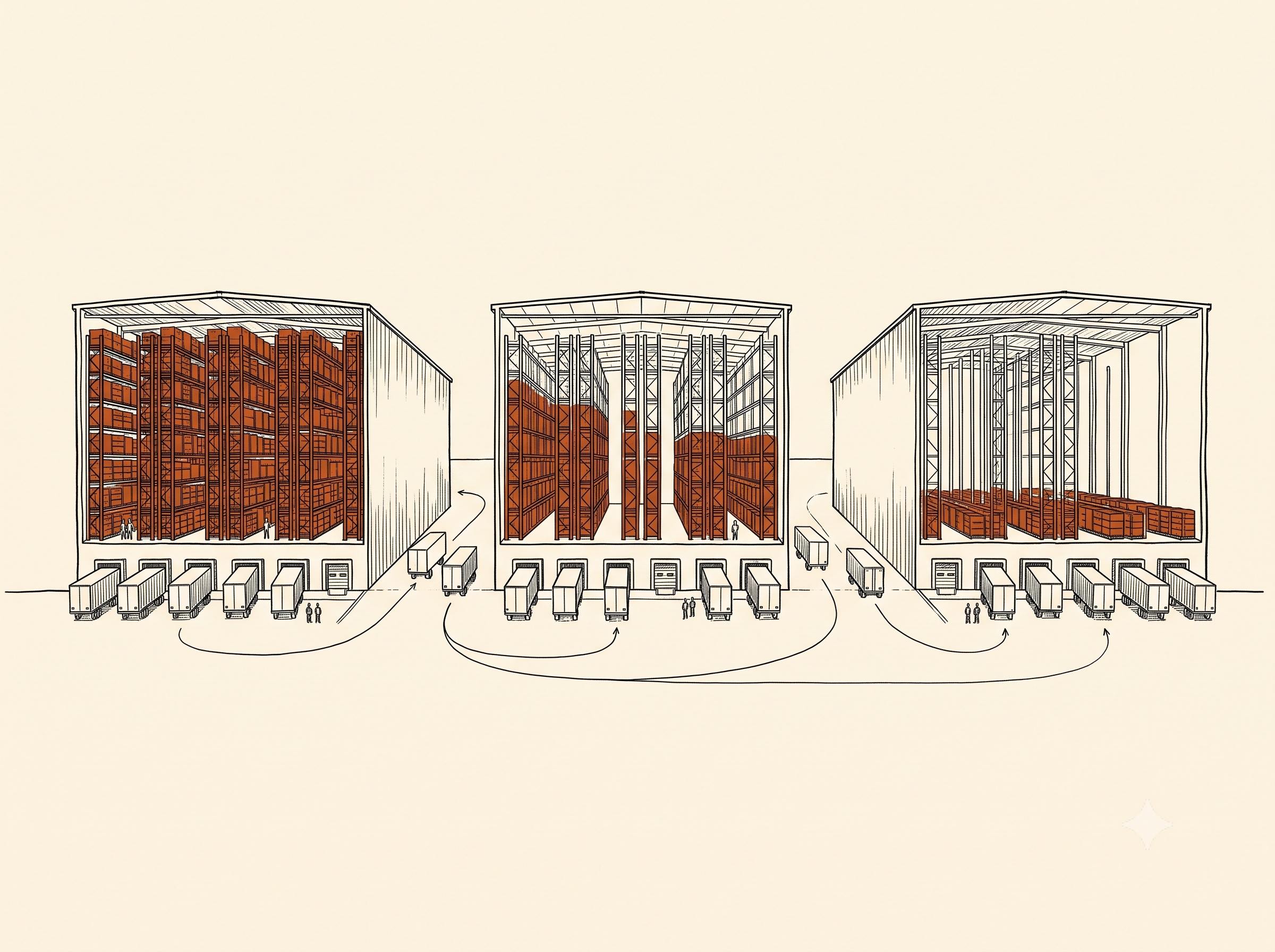
Whether to build, buy, or expand, and how much capacity to put in place for the demand you expect three years out. The new DC, the automation retrofit, the port allocation you commit to before the volume exists.

SUPPLY CHAIN
Test the network redesign before committing capital. Stress the inventory policy before the season does. Prove the distribution center can hit its rate before the automation order ships. SimWell builds working models of how your operation behaves, so the hardest calls get made on evidence instead of conviction.
The gap between the data and the decision
Supply chains have grown too interconnected for anyone to hold the whole system in their head. A supplier's lead time slips two weeks and the promise date survives on paper while safety stock quietly covers the gap. A mode shift that saves freight cost on one lane adds a day of variability that three DCs downstream end up absorbing. The consequences of the hardest decisions stay invisible until after the commitment is made, and by then they're expensive and lasting.
Inside that reality, the stall takes familiar forms:
The operation
The room can't converge.
The tools show a snapshot.
The capability lives in one person.
Nobody trusts the number.
And it lands on you
The decisions supply chain leaders own
None of these decisions arrives alone. The network design fixes what inventory staging can achieve. Inventory placement fixes what the DC has to absorb on a peak day. The DC's real throughput sets the staffing envelope, and every one of them determines how the network responds when a supplier goes down. Supply chain performance rides on six decisions that constrain each other, which is exactly why they're hard to make one spreadsheet at a time.
SimWell organizes its work around all six.
Whether to build, buy, or expand, and how much capacity to put in place for the demand you expect three years out. The new DC, the automation retrofit, the port allocation you commit to before the volume exists.
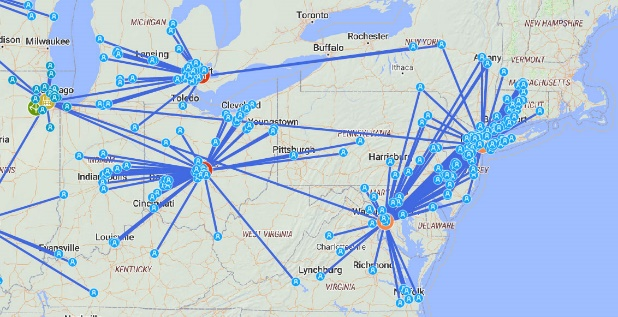
Where facilities should sit and how product should flow between them. Which nodes make and move which SKUs. Where inventory belongs, at what level, under what policy.
How to assign trucks, containers, and crews when demand changes by the day and the lane.
Where the constraint really sits in the building or the flow, and what will move it, before spending to fix the wrong thing.
How many people are needed, where, and on what shift structure, to hit service levels without overspending on labor.
What breaks when a supplier, port, or lane goes down, and what the response should be before the disruption arrives.
Why the current approach stalls out
None of the above is a tooling indictment. The planning stack was built to calculate, forecast, and recommend, and it does those jobs. The decisions above ask a different question: what the whole system will do once you change it. Answering that requires representing variability, congestion, and the interactions between echelons, which is precisely what general-purpose tools were never built to carry.
Simplification helps when it removes noise. Simplification creates risk when it removes the dynamics that decide how the operation actually behaves. A network model that optimizes on averages will hand you a design that works on average and fails in October.
WHAT SIMWELL BUILDS
The core is a working replica of how your operation behaves, validated against the operation itself, down to the operating rules and the variability your planning tools average away. You run your options through it and watch what each one sets in motion before anything is committed.
The model answers the question once. The system makes the answer repeatable, so it's there whenever the decision returns. Your team runs it, reads the results, and makes the call. The work runs on top of the systems you already have, and when the engagement ends, the capability stays.
PROOF

CASE STUDY
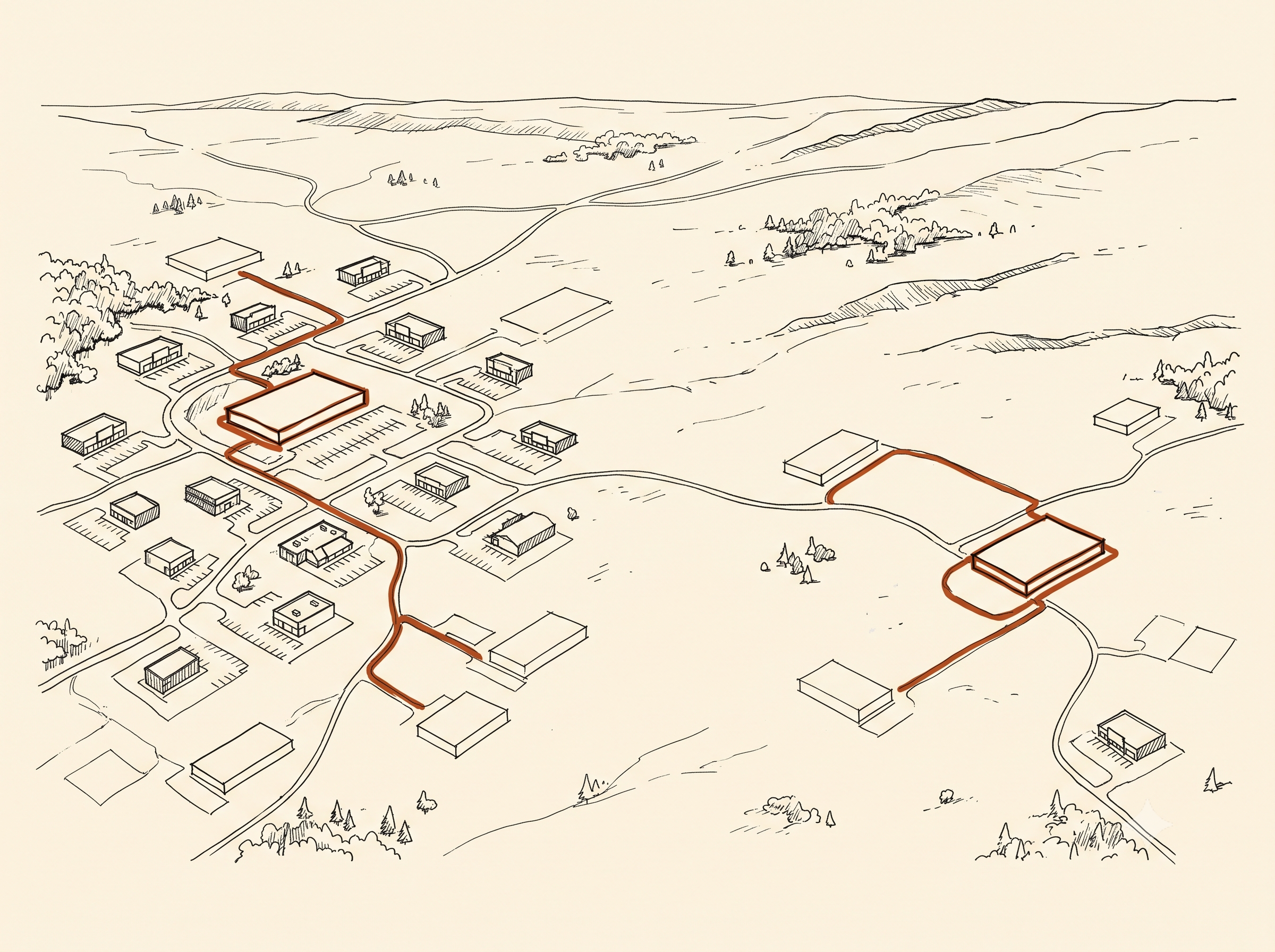
Testing dozens of fulfillment scenarios showed which stores should ship and which should stay satellites. Delivery times were cut in half, at lower transport cost and the same service level.
Read the case
CASE STUDY
RPM eco collects recyclables across Canada from customers whose volumes shift month to month. Predicting the weight waiting at each stop exposed how much capacity was being driven around empty. Empty pickups fell by as much as 90% in some provinces, with 30% more collected per pickup.
Read the case
CASE STUDY
A large apparel company had to turn a strategic forecast into throughput requirements, account for peaks the averages hide, and convince stakeholders to approve the capacity case. A simulation of the logistics network gave them projections they could defend with evidence instead of assertion.
Read the caseHOW ENGAGEMENTS BEGIN
One decision, the options on the table, the constraints that bind, and the criteria the room will judge by. If a model won't help, you hear that here, before anyone scopes anything.
We build a right-sized model against the data you have. Perfect master data is never the entry requirement; the first pass runs on order history, operating rules, and the inputs your team already trusts, and the model itself surfaces which data gaps matter enough to close. Your planners review the logic as it takes form, in sessions scheduled around their planning calendar rather than on top of it.
Scenario results, documented trade-offs, stated assumptions, and a model your team keeps. Model logic and assumptions stay visible to your team throughout, and results are reviewed together rather than delivered as conclusions, so the recommendation you carry forward is one you can defend line by line.
WHY SIMWELL
SimWell's consultants carry one of the deepest modeling benches anywhere, and many spent years inside plants, distribution networks, and logistics operations before they built models of them. They know why a design that clears every review meeting can still fail on the floor, and they build for the floor.
WHO THIS IS FOR
SimWell works with supply chain teams facing a decision this quarter where the downside is real: capital committed for years, service missed, throughput lost shift after shift. If oversimplification has already failed you once, you're in the right place.
Bring one question. If modeling can support a defensible commitment, we'll show you the smallest scope that gets you there. If a model won't help, you'll hear that in the first call.
RESOURCES
BLOG POST
Five plants. Eight customer orders. Watch where they land when cutting math takes over from geography.
Read the post
CASE STUDY
A network redesign guided by simulation cut buffer inventory by 20% while maintaining service coverage across the new footprint.
Read the case study
CASE STUDY
A digital twin of the end-to-end network lets the team compare recovery scenarios before disruption cascades into margin loss.
Read the case study