
What each node makes and moves
Your sites are in the right places. What runs through them is another question.
The map might be fine. The problem is the assignment layered on top of it: which plant makes which product, where returns land and what happens to them, whether the network can deliver the delivery date sales promised. These calls got made one product, one channel, one decision at a time, and no one has looked at the whole flow since.
Model how work moves across the network you already have, test the reassignments you're weighing, and see the cost of the current setup before you defend it.
›We've always made this product at this plant, and no one knows if that's right
›Returns just get dumped at the nearest DC, and we sort them by hand
›Sales keeps promising next-day, and I'm the one explaining why we can't
›We launched DTC, and our fulfillment plan never caught up
›A new channel went live, and nothing about our flow fits it anymore
- We've always made this product at this plant, and no one knows if that's right
- Returns just get dumped at the nearest DC, and we sort them by hand
- Sales keeps promising next-day, and I'm the one explaining why we can't
- We launched DTC, and our fulfillment plan never caught up
- A new channel went live, and nothing about our flow fits it anymore
Are we making and moving the right things in the right places?
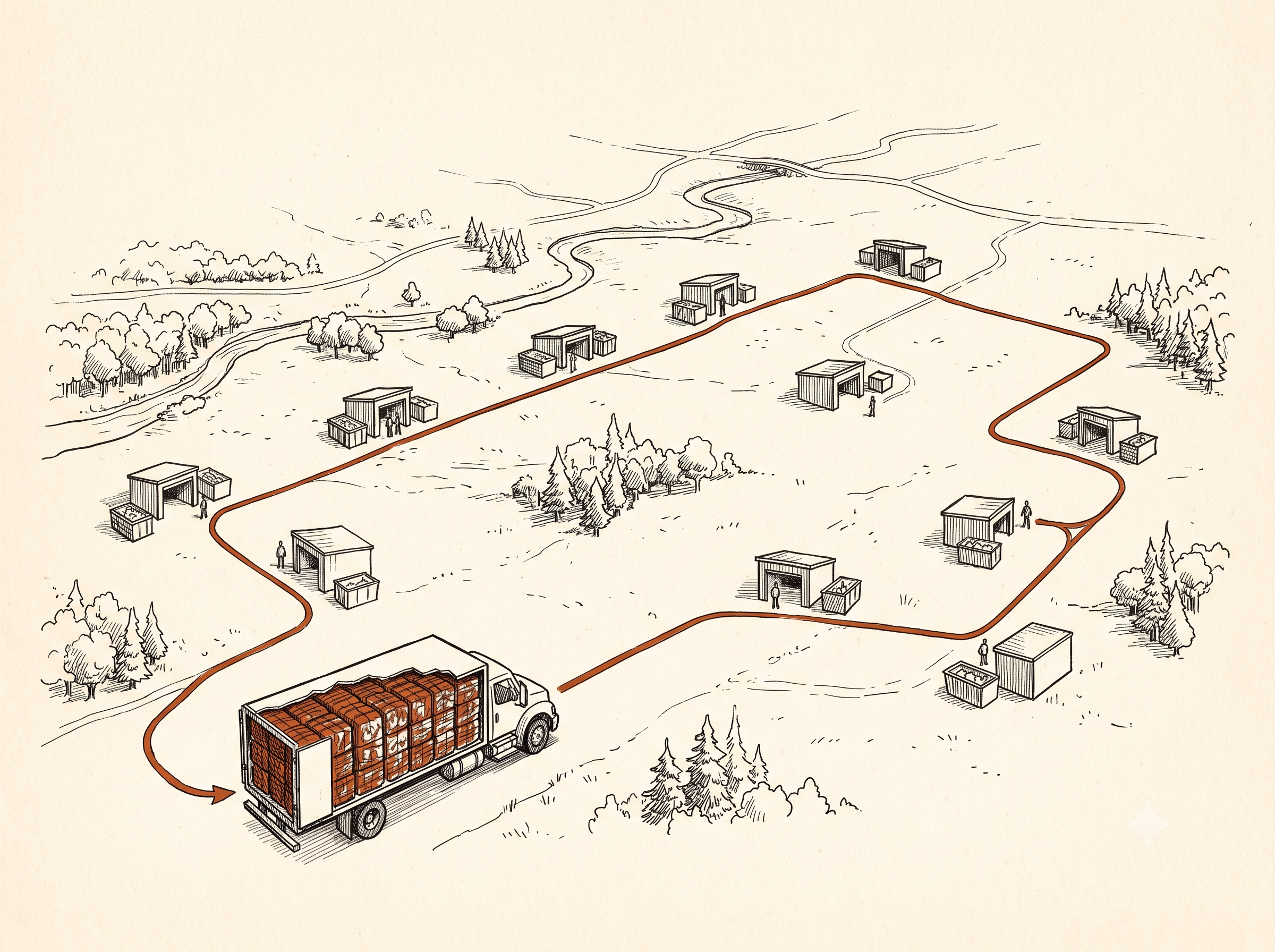
Product-to-plant assignment tends to be inherited, not decided. A line was added here, a product moved there, and the map of what gets made where is the sum of a hundred local calls no one has stepped back from. The same is true for returns, which usually flow to whichever DC is nearest and get sorted by hand, restock or refurbish or liquidate or scrap, one decision at a time. Each of these is a flow decision sitting on top of the sites you already have, and each one hides its cost inside "that's how we've always run it."
Then a channel changes and the seams show. You built the network to ship pallets to wholesale, and now you're shipping parcels direct to consumers, and the flow plan that worked for one demand shape can't absorb the other. The same thing happens when sales promises a transit time the network was never designed to hit. The complaint sounds like a people problem, sales overpromising, and underneath it is a network question: your sites and lanes were never built to deliver that date, and no rule sheet fixes a network that can't reach.
How SimWell solves it
A planning tool can tell you the current flow. It won't tell you what a better assignment is worth, or what it breaks downstream.
The work starts the same way every time: a model of your network as it runs, the plants and their capabilities, the lanes and their loads, the rules your planners follow. We run it across the reassignments you're weighing and it returns a tested profile for each: what making this product here versus there costs today against a modeled alternative, where returns should flow if you designed for recovery instead of nearest-DC habit, whether a new channel's demand shape fits the network or forces a re-plan, whether the next-day promise survives contact with real volume and real distance.
The reframe most teams miss: returns aren't a cost line to minimize, they're a network to design, and a channel launch isn't a fulfillment tweak, it's a new flow the model can test before you commit to it.
Who builds it and who runs it depends on where you're starting from. Either way you keep a decision model your team uses the next time a product moves or a channel launches, not a one-time study that's stale the week after.
How we engage
Where you start depends on what you already know
Four ways in. You pick the one that matches where you are, not a track you have to walk from the beginning.
-
You're not sure which flow decision to attack first
Decision workshop. A focused session that surfaces and ranks the allocation decisions where modeling pays off first.
-
You know the decision, and you want it answered once
Scoped project. You bring the question: which plant makes what, where returns should flow, whether the network can deliver the promise. We build and validate the model and hand you both it and the tool.
-
You know the decision, and you want your own team to own it
Licensing and training. We license the tools and train your team to build and run the allocation models in-house.
-
The assignment shifts every cycle
Managed services. We maintain and evolve the models alongside your team as products, channels, and volumes keep changing.
Common questions before you commit
Common questions before you commit
What are we losing to inaccurate order quoting and expedite freight?+
That number is specific to your lanes and your promise, and finding it is part of the work, not a figure we can quote up front. A model puts a dollar on the gap between what sales promises and what the network can actually hit, so you can see the cost of the current setup before you defend it.
Can we buy a returns tool for this, or does it need a network model?+
A returns tool automates the disposition you've already decided: restock, refurbish, liquidate, scrap. It doesn't tell you where returns should flow in the first place, or whether the routes you've inherited are the right ones. When the question is the network, the shape of the flow itself, a tool that speeds up the current pattern can't answer it. The model can, and then a tool can run the pattern it finds.
We've tried maps and lunch-and-learns and nothing sticks. How does this actually change behavior?+
Behavior sticks when the rule is built into the system people already use, not taped on beside it. A model that shows which promises the network can and can't keep becomes a rule sheet inside your quoting flow, so the constraint lives where the decision gets made instead of in a training deck no one reopens. The change holds because it stops depending on anyone remembering it.
Get started
Your assignment map is the sum of calls no one has stepped back from.
The fastest way to know whether reassigning what runs where pays is to put your own network in front of the question. Book a call and we'll tell you straight.