

Simio Consulting & Licensing
Go Further With Simio.
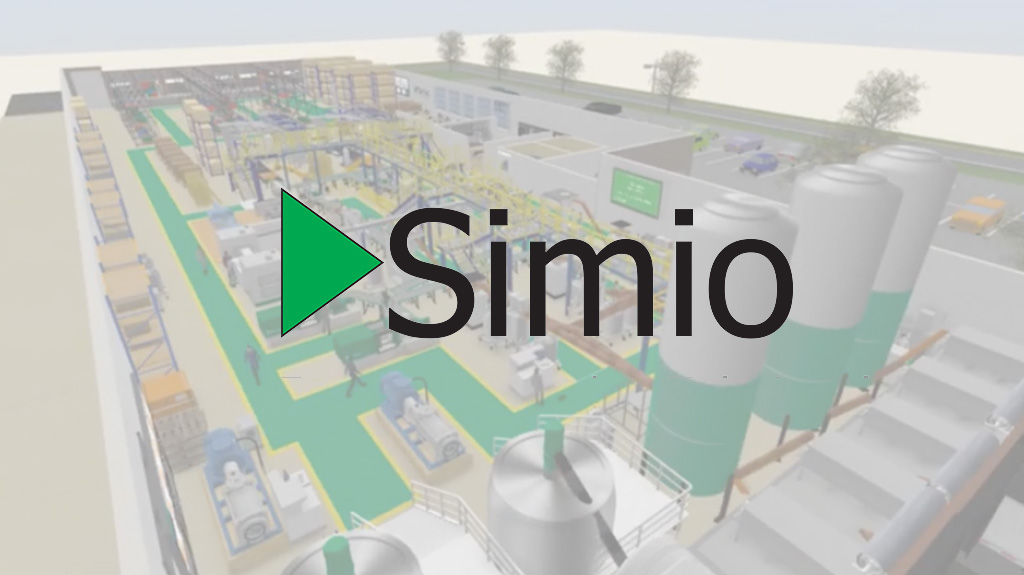
SimWell has one of the deepest Simio consulting practices in the market. If you need to architect a scalable model, connect it to real-time data, or turn it into a planning system your operations team trusts, that's what we do. We build Simio models every day. When you also need the software or training to build internal capability, we handle that too.
Why SimWell for Simio
Simio gives you a modeling environment where simulation and scheduling share the same logic. Turning that environment into a planning system your team runs every week requires architecture decisions, integration work, and operational depth the software alone cannot provide. SimWell brings that depth to every Simio engagement.
Where SimWell goes beyond a working model
- Model architectures that serve simulation analysis and schedule generation from the same build, so your team maintains one model instead of two
- Data refresh pipelines that keep Simio connected to ERP and MES systems, so the model operates as a living planning tool rather than a one-off study
- Scenario-to-schedule workflows designed for planners to run on cadence without needing a modeler in the room
- Validation against the operational data your team already uses to run the business
- Clarity on when to use Simio's scheduling capabilities versus its simulation capabilities, and how to structure a model that serves both
Simio gives you simulation and scheduling in one environment. That combination only pays off when the model reflects how the operation actually runs and the outputs land in a format planners trust enough to act on every week.
Lucas Stretton Partner, SimWell EMEAWhy Simio
Simio is the only platform that combines Discrete Event Simulation and Advanced Planning and Scheduling without custom coding. When the decision lives at the intersection of flow behavior and schedule feasibility, Simio lets teams model both in one environment and stress-test operations against breakdowns, supply shortages, and demand spikes.
Discrete Event Simulation + Advanced Planning and Scheduling
Simio brings DES and APS together on the same model logic. Teams simulate process flow, variability, and resource constraints, then generate feasible production schedules from the same representation. No reconciling two systems or translating between a simulation output and a scheduling input.
Object-Oriented Modeling
Simio uses intelligent objects instead of flowchart blocks. Modelers build reusable components that carry their own behavior, logic, and data. Models scale without collapsing under complexity because new elements inherit structure instead of requiring ground-up configuration.
Process Digital Twin Capability
When Simio connects to refreshed ERP and MES data, the model operates as a Process Digital Twin that stays in sync with production reality. Planners get feasible schedules and flow insights every cycle, not a static snapshot that drifts from how the operation actually runs.
Certified DDMRP Engine
Simio includes a certified Demand Driven MRP engine for buffer design, replenishment logic, and flow-based inventory decisions. Teams running DDMRP get planning logic built directly on simulation behavior rather than layered on top of a separate tool.
AI-Driven Optimization
Simio applies machine learning to predict operational patterns and improve schedule stability across planning cycles.
3D and Omniverse Visualization
Immersive 3D review and NVIDIA Omniverse integration for cross-functional alignment on layout, flow, and capacity decisions.
Enterprise Integration
Connectors for ERP, MES, WMS, transportation systems, BI platforms, and cloud databases. Python integration extends Simio's reach to custom data pipelines and analytics workflows. If your data exists, Simio can consume it.
How we work together
Every SimWell engagement delivers something usable early and builds from there. Four entry points, depending on where your team is starting.
Your team is ready to start building and run models with Simio
Your team wants to apply supply chain optimization or simulation but needs help identifying where to start and which problems to tackle first.
Your team has Simio licenses and wants to build internal capability with structured guidance from working modelers.
You need a full decision tool, scenario library, or ongoing planning capability scoped to your supply chain environment.
Projects from the SimWell portfolio
Real engagements where SimWell delivered repeatable, multi-scenario decision support.
Booked Years Out.Blind Past NextQuarter.
A manufacturer with a multi-year order book could only plan three months out. SimWell built a simulation-based planning environment the team now runs daily to test schedules and answer feasibility questions in real time.
Strategic Storage Planning
A large apparel company could not project warehouse capacity accurately enough to convince stakeholders to act. SimWell built a simulation that replays ten years of inventory behavior in under 30 seconds, turning capacity requests into evidence-backed decisions.
Four Mines. One Model.
A multi-site gold producer needed to defend a fleet capex decision across four mines before a board deadline. SimWell built a single parameterized simulation that replaced weeks of spreadsheet guesswork with scenario-tested answers. Capital went to the real constraint, and the client's own engineer now runs the model independently.
Technical depth
Integration patterns, modeling detail, and deployment considerations for supply chain analysts, internal modelers, and IT stakeholders.
Data Integration
Connect Simio to SQL databases, Excel workbooks, CSV files, and cloud data sources for scenario input and output analysis. Pull order histories, shift schedules, demand profiles, and facility layouts into the model without manual re-entry. SimWell has connected Simio models to SAP, Oracle, various MES platforms, and custom SQL databases across client engagements.
Custom Logic and Object Development
Simio's object-oriented architecture allows modelers to create custom objects that encapsulate behavior, data, and decision logic in reusable components. For edge cases beyond the standard object library, Simio supports add-on process logic and custom properties that extend model behavior without breaking the underlying architecture. Python integration gives modelers direct access to external libraries for data processing, optimization, and machine learning within the Simio environment. SimWell manages the custom logic layer in most client engagements and covers object development in training programs for teams planning to maintain models internally.
3D Layout and Visualization
Import CAD files, facility layouts, and equipment geometry directly into the Simio model environment. The 3D representation becomes a validation tool where stakeholders review the model visually and catch discrepancies before the analysis begins. NVIDIA Omniverse integration extends visual review for facility design, capital investment decisions, and cross-functional stakeholder alignment.
Validation and Calibration
SimWell uses operational data your team already trusts as the calibration baseline. Validation targets include throughput, cycle time, utilization, and resource consumption compared against historical performance. Edge cases get explicit treatment rather than smoothed assumptions. Model behavior gets traced to the underlying logic when stakeholders question results.
Questions buyers ask before they engage
Do we need programming experience to use Simio?
No. Simio's object-oriented interface handles most modeling tasks through visual configuration rather than code. When custom logic is needed, SimWell manages the add-on process logic in most engagements. If your team plans to maintain models internally, our training programs cover the object development and logic configuration your modelers will actually use.
What if we are not sure Simio is the right tool for our problem?
Start with a Discovery Workshop. SimWell defines the decision, assesses the modeling requirements, and recommends the right tool and approach before any build begins.
Can SimWell work alongside our internal modelers?
Yes. The Coach the Modeler engagement supports teams who build models in-house and want expert review at key points. Custom Projects often run as embedded engagements where SimWell modelers work alongside internal teams through real project delivery.
What do you need from us to get started?
A clear decision owner, a working description of the problem, and access to enough data to validate the model approach. SimWell's discovery process tightens the decision definition and identifies data gaps before the build begins, so a polished problem statement is not a prerequisite.
Can Simio handle both simulation and production scheduling?
Yes. Simio's combined DES and APS capability means the scheduling engine operates on the same model logic as the simulation. Schedules reflect realistic constraints, variability, and resource behavior rather than idealized assumptions. SimWell structures models so teams can run both simulation analysis and schedule generation from a single environment.