industries

Quick service restaurants

Test the new layout before the concrete gets poured. Prove the staffing model before it rolls out to a thousand stores. Find the line's breaking point before Saturday night does. SimWell builds working models of how your stores behave, so the hardest calls get made on evidence instead of conviction.

The gap between the data and the decision

No one can make the call.

You have the POS data. You have the schedules, the SOPs, the CAD drawings. The decision is due this quarter, and no one can make the call.

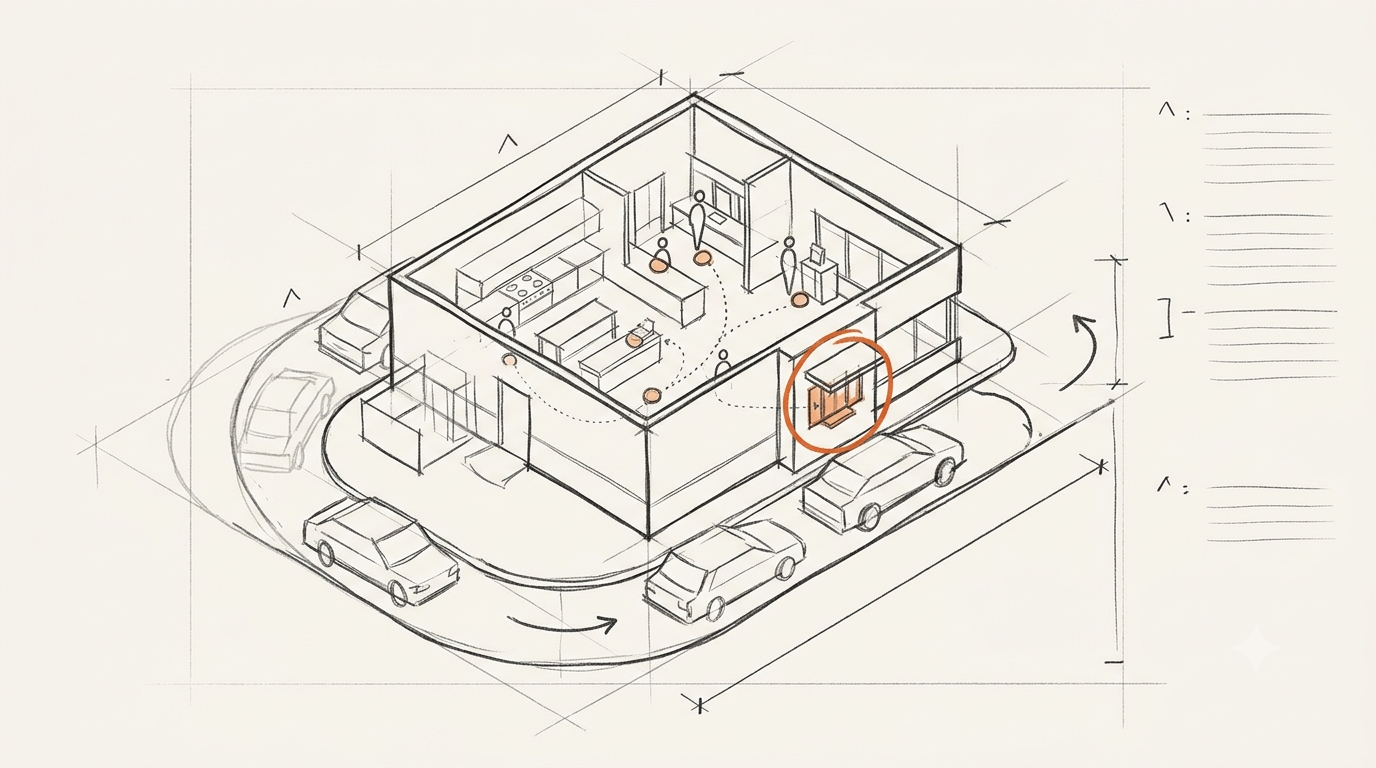
A quick service restaurant is a whole operation compressed into a few thousand square feet. A delivery order lands in the middle of the lunch rush, and the drive-thru pays for it two cars later. A prep item runs out at 12:40, and speed of service holds for six minutes on buffer stock before the line quietly falls apart. What works during a weekday lunch fails during a weekend dinner, and the consequences of the hardest decisions stay invisible until after the commitment is made: the remodel is built, the labor model is live, the new procedure is published to every store.

Inside that reality, teams get stuck in familiar ways:

The operation

Nobody trusts the number.

The staffing model performs on the average day, and no store breaks on the average day. The breaks come at the surge, the oven that goes down mid-lunch, the third-party orders that spike while the drive-thru is already full.

The room can't converge.

An operations excellence team and a franchise council look at the same workflow and reach opposite conclusions, each backed by a different store's numbers, and the rollout sits unmade. At the same time, every location keeps running its own way.

The tools show a snapshot.

The schedule built from last month's sales, the layout drawn in CAD, the KPI report from yesterday. What you need is what happens next: how the lunch peak stacks orders across four channels at once, where the batch policy gives way when a promotion hits, what one fewer body on the evening shift does to speed of service. Static tools can't show a moving line.

The capability lives in one person.

Where a modeling seat exists at all, it sits at headquarters with someone whose departure would take it with them, and the questions arrive faster than one desk can answer: every remodel, every menu launch, every new format.

And it lands on you

The weight lands on one desk.

Someone signs the remodel budget or approves the chain-wide labor model. All of that interaction, all of that risk, and nothing exists to show the room what each option sets in motion before the signature.

The decisions quick service leaders own

Six decisions that constrain each other, which is exactly why they're hard to make one spreadsheet at a time.

None of these decisions arrives alone. The layout fixes what any workflow can achieve inside it. The workflow sets the staffing envelope. Staffing decides what the rush does to speed of service, and the prep policy decides whether freshness or waste gives way first when demand moves.

SimWell organizes its work around all six.

Capital & capacity

Whether to build the new format, remodel the existing store, or add the second drive-thru lane, and how much throughput the design has to carry once the concrete commits it. Layout selection, equipment placement, kiosk counts: choices that lock in a store's capacity for years.
Network & footprint

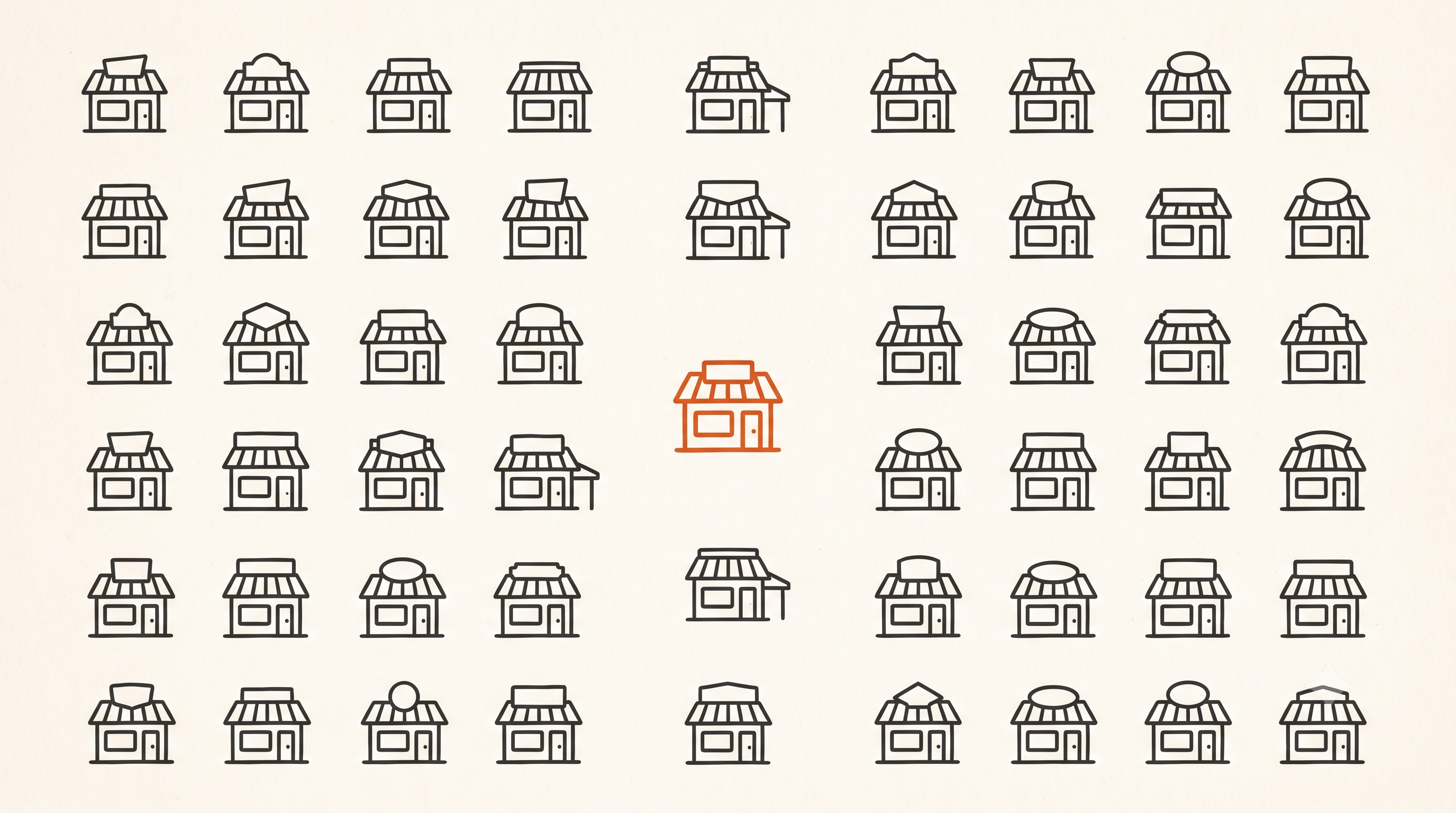
Which formats fit which sites, and which workflow becomes the standard. A chain runs one operating model across hundreds or thousands of stores, and the choice of what to standardize, from the circle of operations to the mobile pickup zone, multiplies across every location it touches.

Routing & dispatch

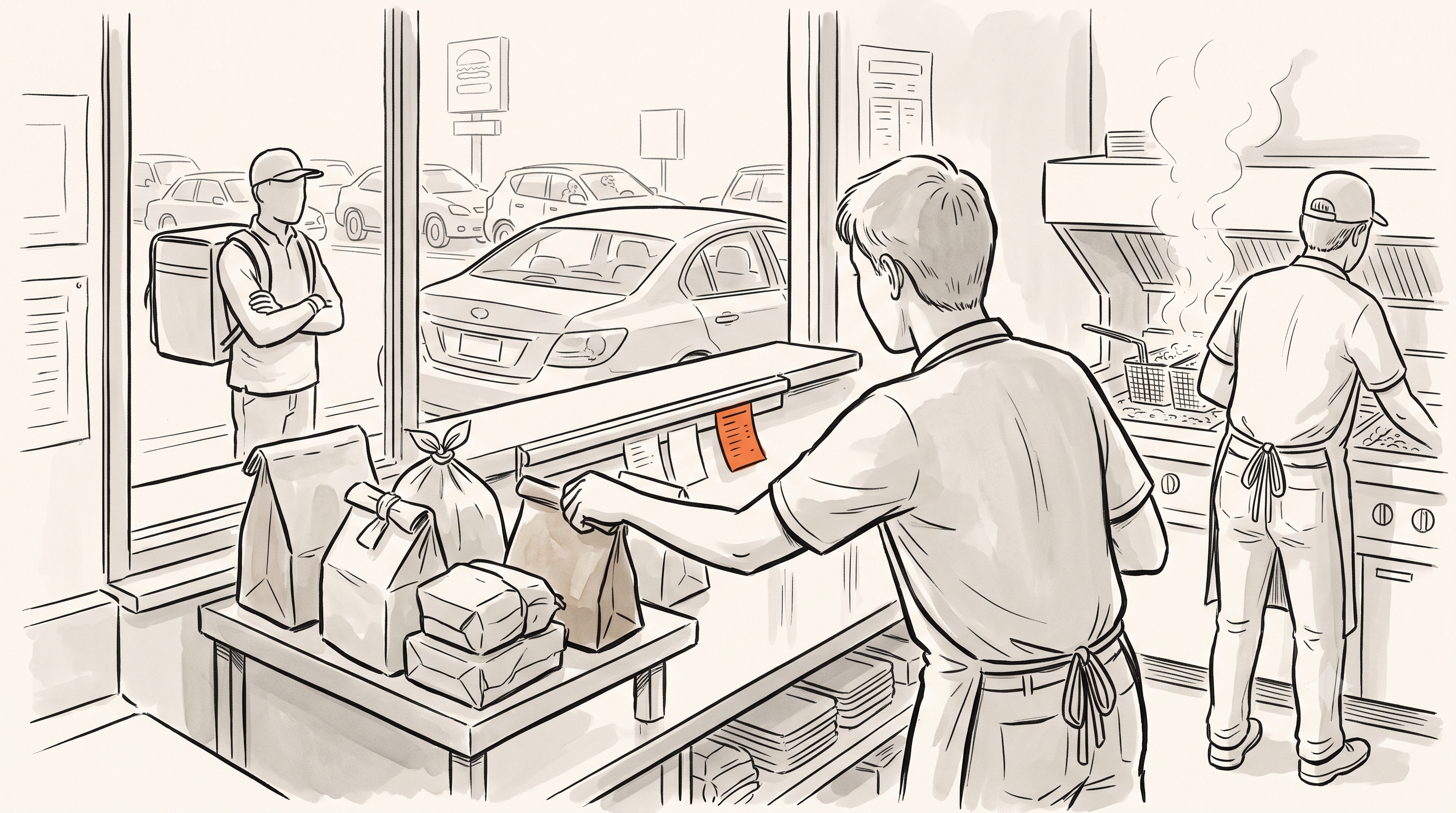
How orders and tasks move through the store when demand shifts by the hour and the channel. Make-to-order or batch. Which order jumps the queue when delivery, drive-thru, and counter land at once. When replenishment triggers, and how shelf life bounds the whole policy.

Throughput & bottlenecks

Where the line really breaks during the rush, and what will move it, before spending on the wrong fix. The bottleneck that looks like a staffing problem and turns out to be a handoff point, or the equipment buy that would have shifted the constraint one station downstream.

Staffing & scheduling

How many people are needed, in which roles, at which hours, to hit target service times without overspending on the largest controllable operating cost in the business. Cross-training, zone assignments, and a shift structure that survives both the Tuesday lull and the Friday surge.

Contingency & risk

What breaks when the promotion outperforms the forecast, a warmer goes down mid-lunch, or a key prep item runs out mid-shift, and what the response should be before it happens at the counter.

Why the current approach stalls out

A schedule that works on average fails at 12:15 on Friday.

None of the above is an indictment of how stores are run today. Historical schedules, SOPs, manager judgment, and field trials carry the daily operation, and they earned their place. The decisions above ask a different question: what the whole store will do once you change it. Answering that requires representing the variability, the congestion, and the interactions between channels and stations, which is precisely what a spreadsheet or a one-store trial was never built to carry.

A field trial tests one store, one week, one crew, one demand pattern. A staffing model built on averages schedules a day that never happens.

WHAT SIMWELL BUILDS

We build decision systems.

The core is a working replica of how your store behaves, validated against the store itself, down to the operating rules and the variability your reports average away: staff movement between stations, order arrivals by channel and by hour, prep times, shelf life, the way a delay at one handoff spreads through everything downstream. You run your options through it and watch what each one sets in motion before anything is committed.

The model answers the question once. The system makes the answer repeatable, so it's there whenever the decision returns: the next remodel, the next menu launch, the next format. Your team runs it, reads the results, and makes the call. The work runs on top of the systems you already have, and when the engagement ends, the capability stays.

PROOF

Decisions made on evidence, not conviction.

Gemini_Generated_Image_5uog3h5uog3h5uog

CASE STUDY

How much can a new store format take before it breaks?

The client was building physical prototypes in test labs and running them with real crews and equipment to find each design's breaking point. SimWell replaced that with a hybrid simulation model and a trained AI brain that cut the number of experiments needed, improving throughput, speed of service, and queue lengths across every prototype simulated.

Read the case study
QSR_con2

CASE STUDY

Which layout should thousands of stores standardize on?

A pizza chain opening hundreds of stores a year had no proven operational layout and no answer on staffing by hour or day. SimWell's agent-based model covered every step from dough stretch to handoff, letting the corporate team compare circle-of-operations scenarios that couldn't be tested any other way, and take the case to franchisee owners.

Read the case study
QSR_con3

CASE STUDY

How do you staff a restaurant that doesn't exist yet?

A new QSR concept serving drive-thru, dine-in, online pickup, and carry-out had no historical data to schedule against. SimWell's model tested drive-thru configurations and sized staff and equipment against expected order rate and channel mix, settling the layout before anything was built.

Read the case study

HOW ENGAGEMENTS BEGIN

One decision, bounded scope, sized to the window the decision actually has.

  1. 01

    Frame the decision.

    One decision, the options on the table, the constraints that bind, and the criteria the room will judge by. If a model won't help, you hear that here, before anyone scopes anything.

  2. 02

    Build and validate the model.

    We build a right-sized model against the data you have. Perfect data is never the entry requirement; the first pass runs on POS history, operating procedures, and the inputs your team already trusts, and the model itself surfaces which data gaps matter enough to close. Your operators review the logic as it takes form, so the store in the model behaves like the store they run.

  3. 03

    Deliver the decision package.

    Scenario results, documented trade-offs, stated assumptions, and a model your team keeps. Model logic and assumptions stay visible throughout, and results are reviewed together rather than delivered as conclusions, so the recommendation you carry to an executive team or a franchise council is one you can defend line by line.

WHY SIMWELL

Plenty of firms can build a model. Fewer can build one that holds up inside a real operation.

SimWell's consultants carry one of the deepest modeling benches anywhere, and many spent years inside plants, distribution networks, and logistics operations before they built models of them. They know why a design that clears every review meeting can still fail on the floor, and they build for the floor.

WHO THIS IS FOR

A decision this quarter where the downside is real.

A decision this quarter where the downside is real: capital committed to a layout for years, a labor model rolled out across the chain, speed of service lost rush after rush. If a field trial has already failed to settle the argument once, you're in the right place.

Discuss the decision

Bring one question. If modeling can support a defensible commitment, we'll show you the smallest scope that gets you there. If a model won't help, you'll hear that in the first call.

Start a conversation

RESOURCES

More on the decisions QSR leaders own.

QSR

eBook

8 Simulation Questions Every Quick-Service Restaurant Should Be Asking

Examine the toughest questions SimWell can answer for QSR.

Download the Guide