INDUSTRIES

Rail and intermodal

Find the capacity on the line before signing for new track. Prove the maintenance plan before the fleet transition forces it. Know where the yard backs up before the cars are already sitting there. SimWell builds working models of how your network behaves, so the hardest calls get made on evidence instead of conviction.

rail2

The gap between the data and the decision

No one can make the call.

You have the dispatch logs. You have the maintenance records, the car fleet reports, the capacity study from two years ago. The decision is due this quarter, and no one can make the call.

Almost nothing in a rail operation stays local. A load-out runs late at the source and the meet three hundred miles down the line has to be replanned, which moves the next meet, which moves the crew that was going to relieve the one about to time out. A third-party segment gives you a window instead of a time. A vessel books a berth against an arrival that is now a guess. Weather stops loading for a day and the recovery takes a week. The consequences of the hardest decisions stay invisible until after the commitment is made: the siding is built, the maintenance standard is published, the schedule is live and the network is running on it.

Inside that reality, teams get stuck in familiar ways:

The operation

Nobody trusts the number.

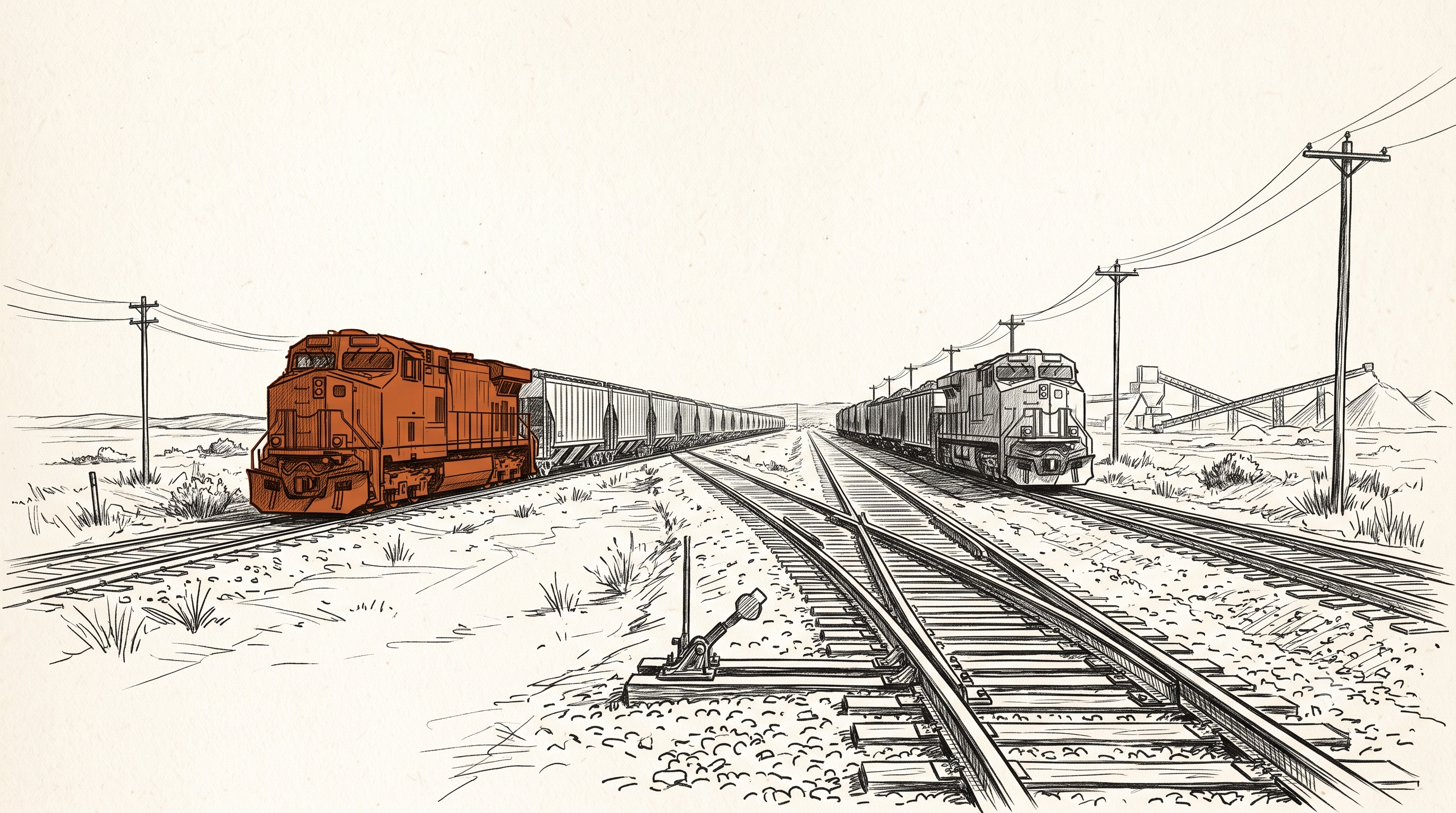
The capacity figure holds on an average day, and no network breaks on an average day. The breaks come when a locomotive fails on single track, when absenteeism lands on the same shift as a weather hold, when two blocks arrive from different sources within the same hour and only one can move.

The room can't converge.

Operations says the constraint is the corridor. Capital planning says the constraint is the terminal. Both bring numbers, both are reasoning from a different slice of the same system, and the funding decision sits unmade while the cost of waiting compounds.

The tools show a snapshot.

The meet-pass planner answers one question. The production planning tool answers another, the resource system a third, and nothing on the market answers all of them together on the horizon the plan actually runs on. What you need is what happens next: how a delay at the load-out surfaces four hours later at the terminal, which siding recommission adds throughput and which adds none, what one fewer crew on the night shift does to cycle time. Static tools can't show a moving network.

The capability lives in one person.

The person who can tell you what the territory will do under a given plan holds it in their head, and their departure would take it with them. Meanwhile the questions arrive faster than one desk can answer: every capital request, every fleet change, every seasonal swing.

And it lands on you

The weight lands on one desk.

Someone signs the capital request or approves the network-wide maintenance plan. All of that interaction, all of that risk, and nothing exists to show the room what each option sets in motion before the signature.

The decisions rail leaders own

Six decisions that constrain each other, which is exactly why they're hard to make one spreadsheet at a time.

None of these decisions arrives alone. The footprint fixes what any schedule can achieve inside it. The schedule sets the crew envelope. Crew availability decides what a single disruption costs, and the maintenance plan decides whether availability or asset life gives way first when demand climbs.

SimWell organizes its work around all six.

Capital & capacity

Whether to build the siding, extend the yard, buy the locomotives, or add the second load-out, and how much throughput the investment has to carry once the steel is in the ground. The nine-figure track request that turns out to be a scheduling problem, or the equipment buy that moves the constraint one node downstream instead of removing it.
Network & footprint

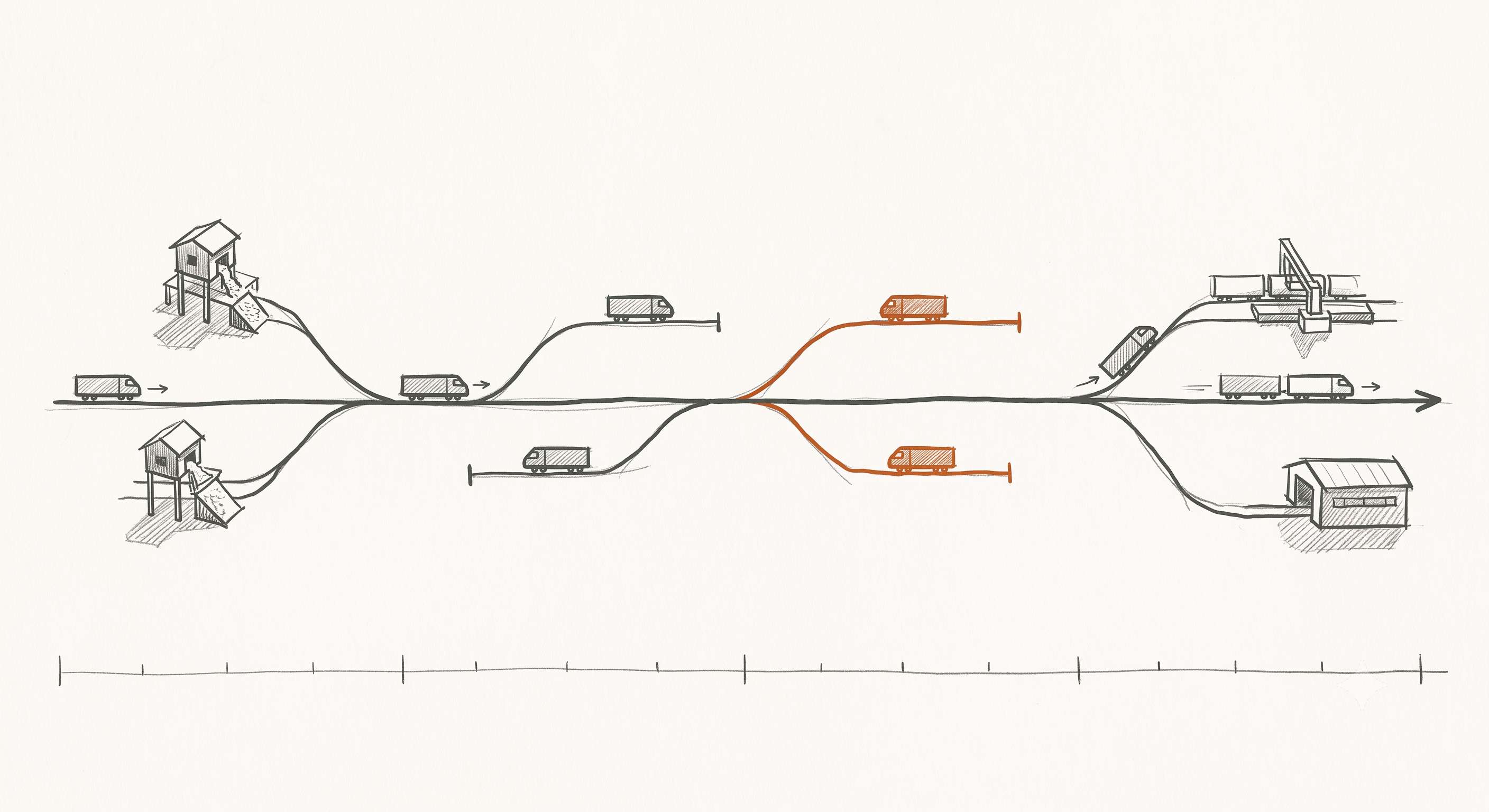
Where terminals, sidings, and staging should sit, and how material should flow between them. Which corridors carry which commodities, where the interchange happens, and what a third-party segment does to the design when the window it gives you is wider than the plan can absorb.

Routing & dispatch

How trains, crews, and equipment get assigned when demand shifts by the day and the lane. Where the meets fall on single-track territory and how the timing holds when one side runs late. Which block moves first when two sources are ready and the corridor can take one.

Throughput & bottlenecks

Where the constraint really is, and what will move it, before spending on the wrong fix. The yard congestion that looks like a track problem and turns out to be a processing sequence, or the corridor that has more capacity in it than anyone has been able to prove.

Staffing & scheduling

How many crews are needed, in which qualifications, at which hours, to hold the plan without overspending. Shift structure, relief points, hours-of-service exposure, and a roster that survives both a quiet Tuesday and the week after a washout.

Contingency & risk

What breaks when a locomotive fails on single track, a load-out goes down mid-cycle, or a storm closes the site for two days, and what the response should be before it happens on the network.

Why the current approach stalls out

A plan that clears the meeting meets a failed unit on single track at 3 a.m.

None of the above is an indictment of how railroads are run today. Dispatch experience, planning systems, standard operating procedures, and hard-won territory knowledge carry the daily operation, and they earned their place. The decisions above ask a different question: what the whole network will do once you change it. Answering that requires representing the variability, the congestion, and the interactions between sites, corridors, terminals, and crews, which is precisely what a spreadsheet or a single-corridor study was never built to carry.

A pilot on one lane tests one lane, one season, one crew, one demand pattern. A capacity model built on averages plans a network that never runs.

WHAT SIMWELL BUILDS

We build decision systems.

The core is a working replica of how your network behaves, validated against the operation itself, down to the rules your planners actually use and the variability your reports average away: load-out and dump rates, meet logic on single track, siding lengths, crew qualifications and relief, maintenance windows, third-party segment behavior, and the way a delay at one node spreads through everything downstream. You run your options through it and watch what each one sets in motion before anything is committed.

The model answers the question once. The system makes the answer repeatable, so it's there whenever the decision returns: the next capital cycle, the next fleet transition, the next season. Your team runs it, reads the results, and makes the call. The work runs on top of the systems you already have, and when the engagement ends, the capability stays.

PROOF

Decisions made on evidence, not conviction.

rail1-1

CASE STUDY

How do you plan a yard that never sits still?

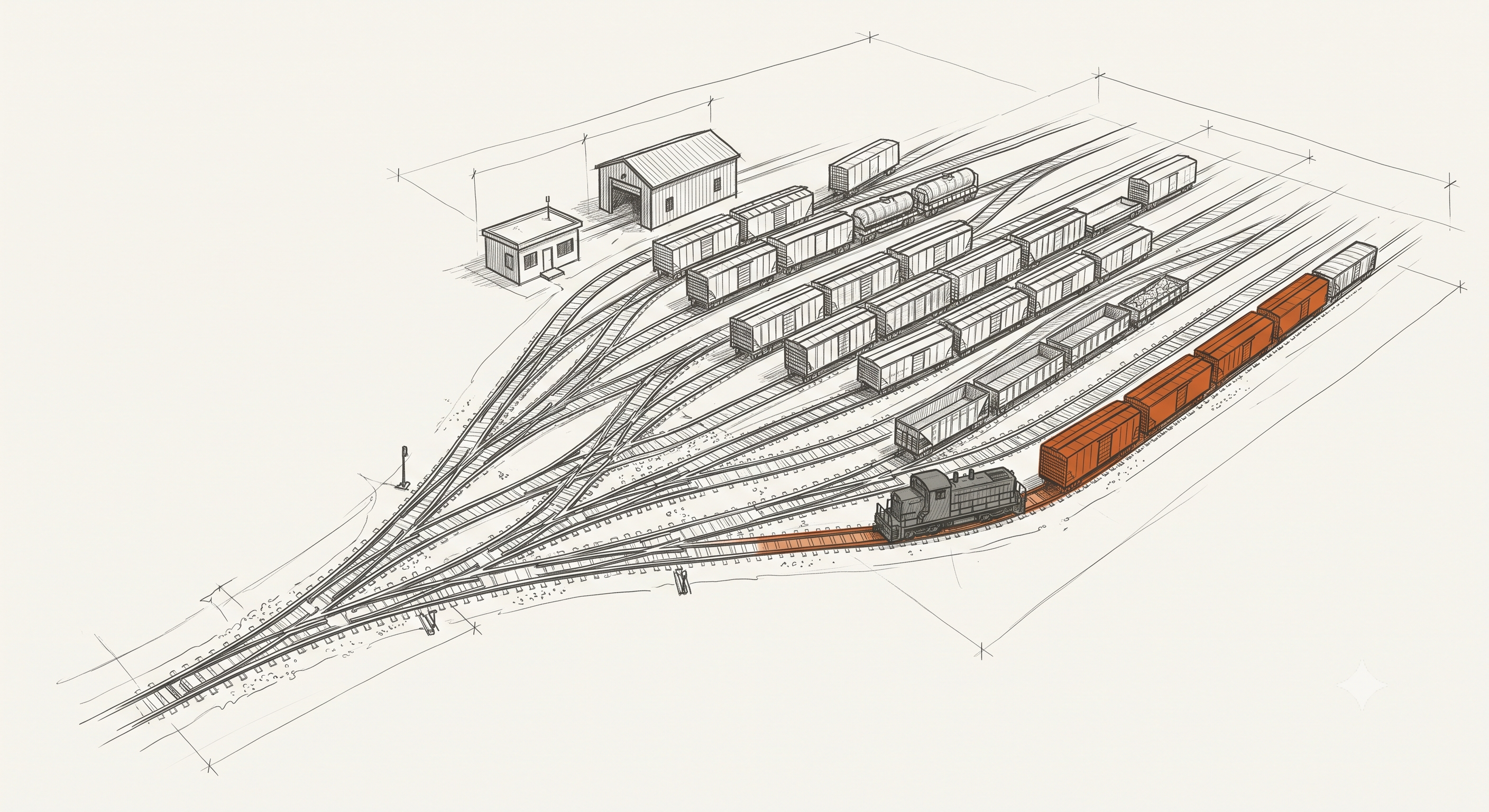
A yard's economics turn on how fast cars move through it, and optimization alone can't hold a system that changes hour to hour, runs on variability, and is bounded by track space. SimWell built a working model of the yard in AnyLogic that planners drive themselves, moving cars in blocks or singly, coupling and decoupling, testing placements anywhere on the track, with the yard's own processing logic embedded so scenarios run and compare without touching live operations.

Read the case study
rail1-2

CASE STUDY

Will the plan we just approved survive the week?

A railway needed one answer where its tools gave several: loading, meets across the network, unloading, maintenance, and crew availability, all inside the same plan, on a two-week to three-month horizon. SimWell built the railway in full detail first and the adjacent operations in simplified form, so the team had end-to-end visibility early and could run a week's scenarios in seconds inside the planning meeting itself.

Read the case study
rail1-3

CASE STUDY

Which train has to move so the vessel doesn't wait?

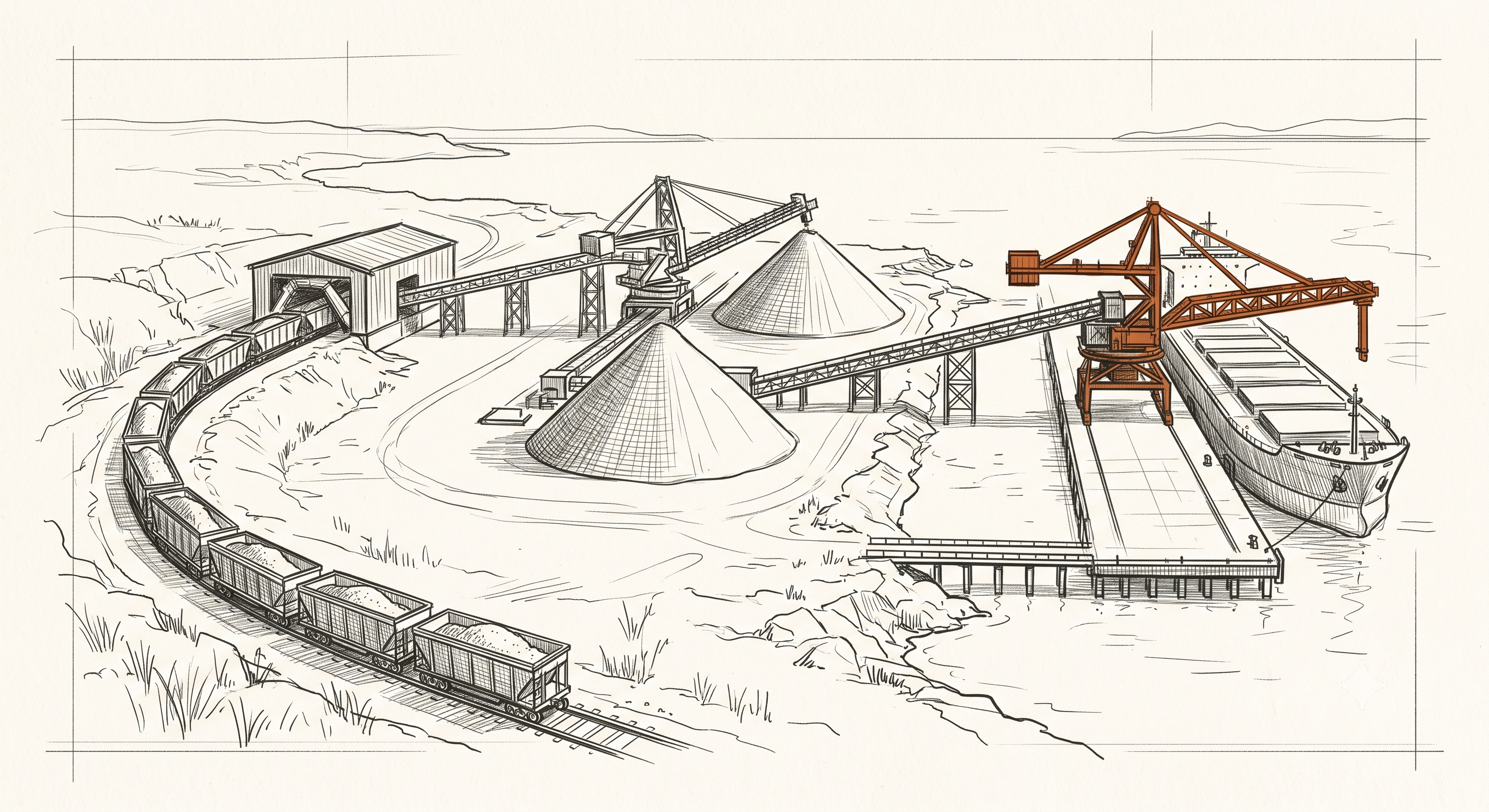
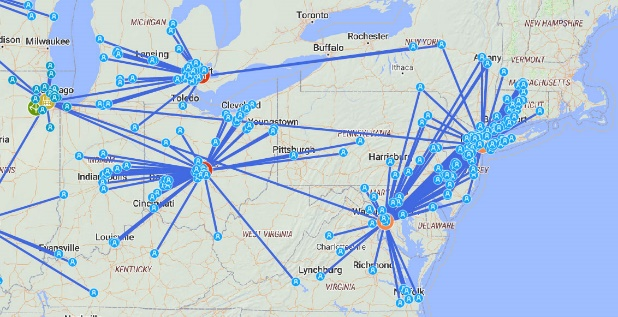
A producer moved a critical material from its mine site across a continental rail network to vessel terminals on two coasts, where a berth held empty is the most expensive hour in the chain. SimWell modeled the site, the corridor, the stockpiles, and the vessel schedules together in Arena with connected dashboards, so the team could test any train and vessel schedule against real corridor capacity before committing to it.

Read the case study

HOW ENGAGEMENTS BEGIN

One decision, bounded scope, sized to the window the decision actually has.

  1. 01

    Frame the decision.

    One decision, the options on the table, the constraints that bind, and the criteria the room will judge by. If a model won't help, you hear that here, before anyone scopes anything.

  2. 02

    Build and validate the model.

    We build a right-sized model against the data you have. Perfect data is never the entry requirement; the first pass runs on dispatch history, operating rules, and the inputs your team already trusts, and the model itself surfaces which data gaps matter enough to close. Your dispatchers and planners review the logic as it takes form, so the territory in the model behaves like the territory they run.

  3. 03

    Deliver the decision package.

    Scenario results, documented trade-offs, stated assumptions, and a model your team keeps. Model logic and assumptions stay visible throughout, and results are reviewed together rather than delivered as conclusions, so the recommendation you carry to a capital committee or an executive team is one you can defend line by line.

WHY SIMWELL

Plenty of firms can build a model. Fewer can build one that holds up inside a real operation.

SimWell's consultants carry one of the deepest modeling benches anywhere, and many spent years inside railroads, yards, terminals, and bulk logistics operations before they built models of them. They know why a plan that clears every review meeting can still fail on the territory, and they build for the territory.

WHO THIS IS FOR

A decision this quarter where the downside is real.

A decision this quarter where the downside is real: capital committed to track or terminal for decades, a maintenance plan rolled out across the fleet, throughput lost cycle after cycle to a constraint no one has been able to locate. If a study has already failed to settle the argument once, you're in the right place.

Discuss the decision

Bring one question. If modeling can support a defensible commitment, we'll show you the smallest scope that gets you there. If a model won't help, you'll hear that in the first call.

Start a conversation

RESOURCES

More on the decisions rail leaders own.

Rail dispatch control room

BLOG POST

Rail logistics: how simulation supports real-time decisions in a control room

Why no two control centers are alike, and what an incremental path to integrated planning looks like.

Read the article
A retailer redesigns its supply chain network

EBOOK

SimWell's capabilities for decision intelligence

The decision coverage map, the capabilities behind it, and the ways teams engage.

Download the guide
24 questions to ask when investing in simulation

GUIDE

24 questions to ask when investing in simulation

What to put to a vendor, and to your own team, before a modeling investment gets committed.

Download the guide