INDUSTRIES

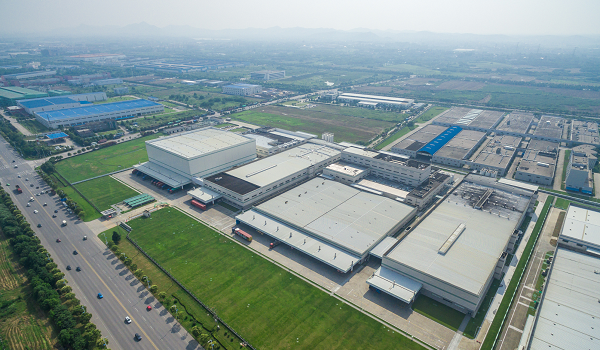
Warehousing

Know where the constraint sits before the automation order ships. See whether the building can handle peak volume before the lease gets signed. Watch what a bad Monday does to the cutoff a week before it happens. SimWell builds working models of how your operation behaves, so the hardest calls get made on evidence instead of conviction.

warehouse_hero

The gap between the data and the decision

No one can make the call.

You have the WMS extracts. You have labor standards, pick rates by zone, dock schedules, three years of order history, and an integrator's throughput rating on a spec sheet. Capital approval closes in six weeks, and no one can make the call.

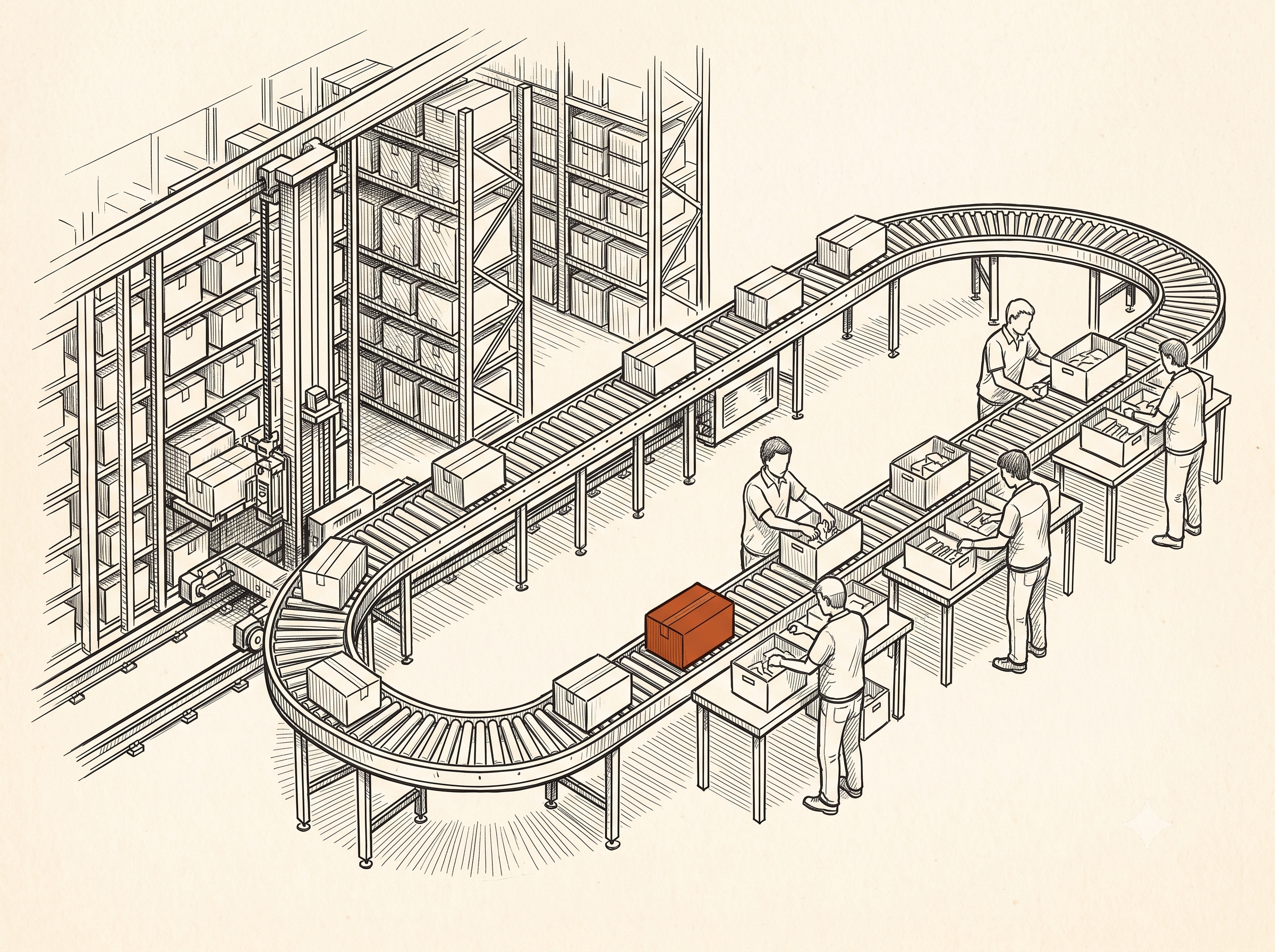
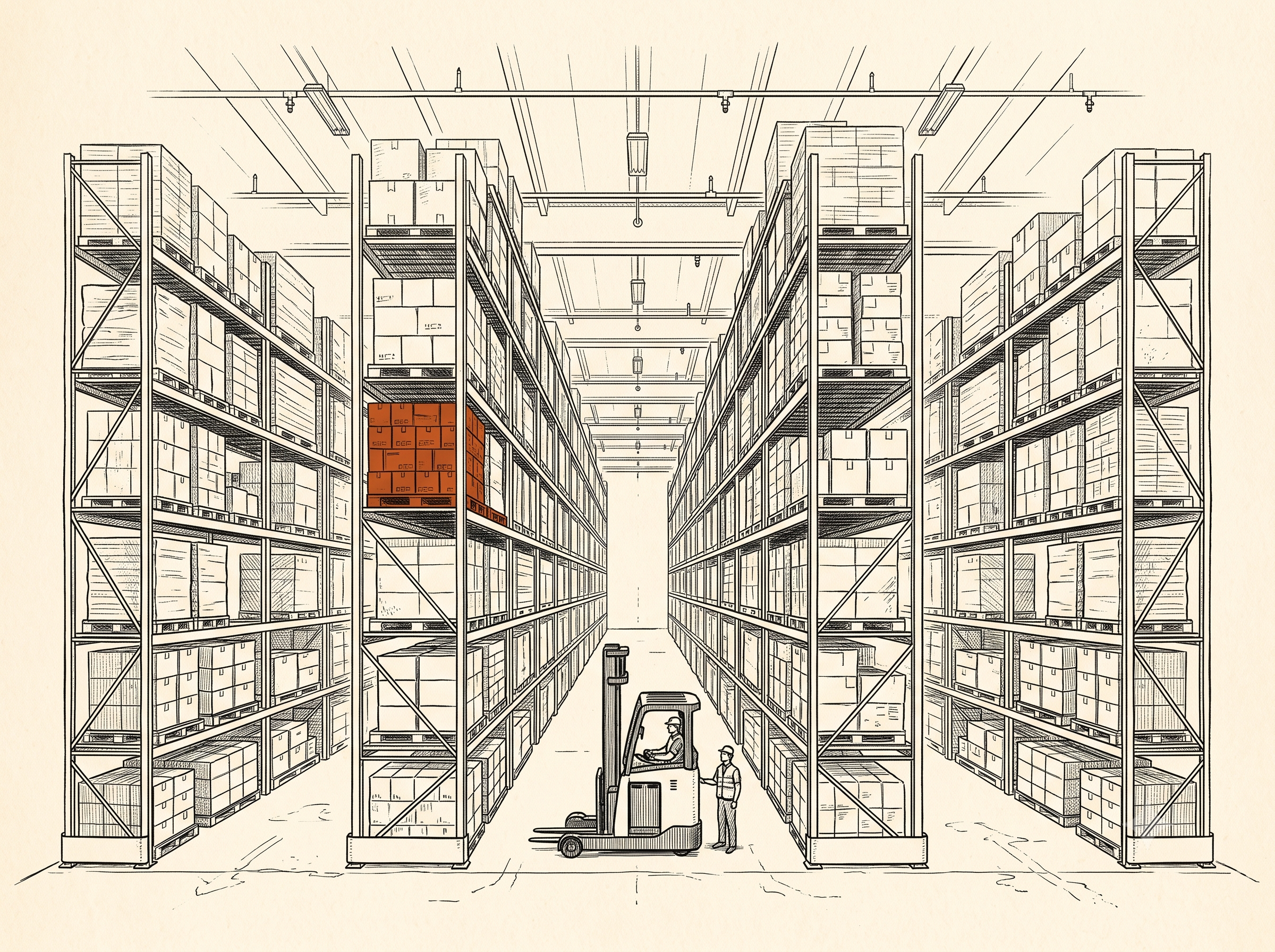
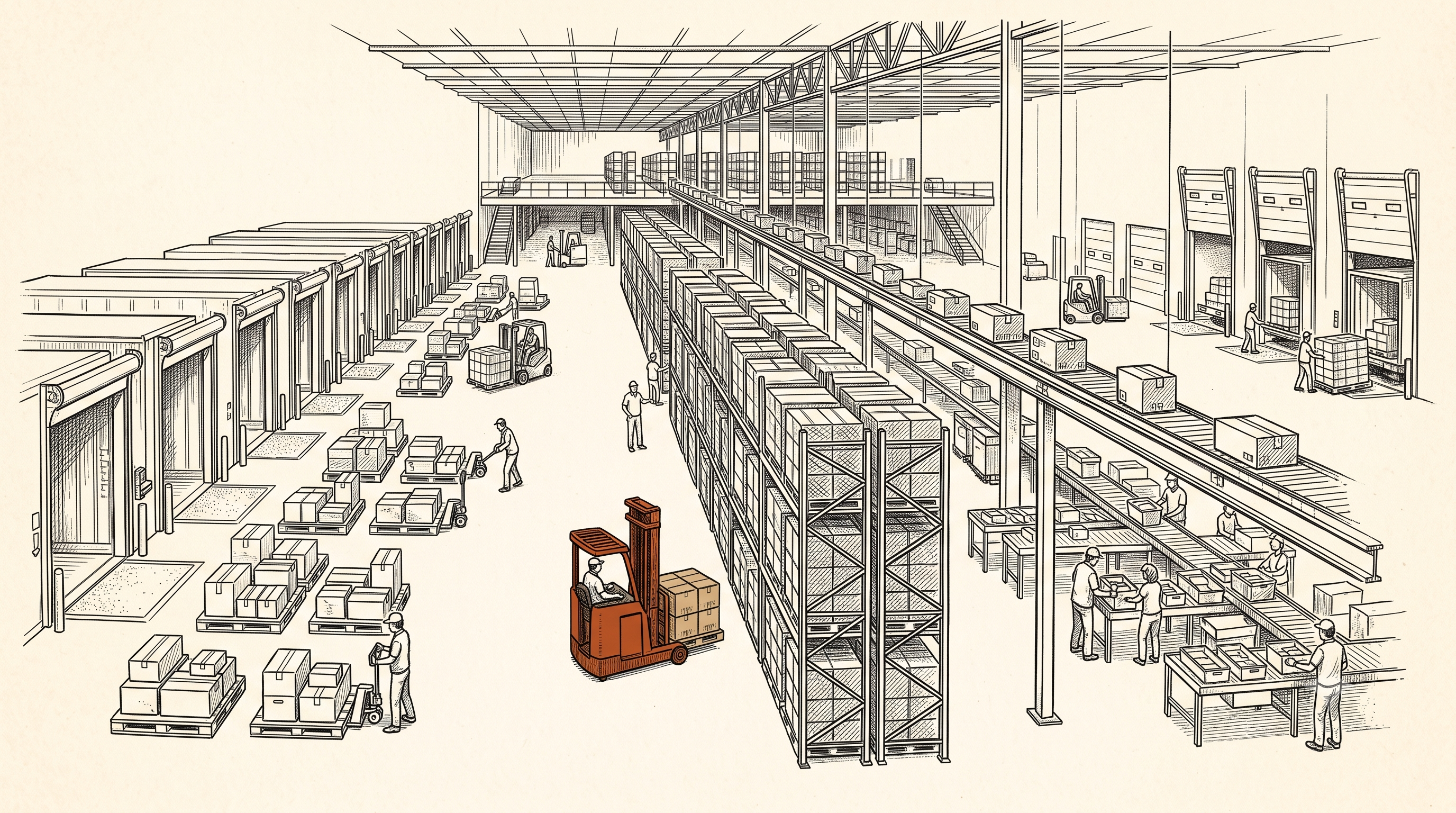
A distribution center is a chain of handoffs that runs from the trailer at the door to the trailer at the other door, and every handoff sets the pace for the next. A trailer arrives ninety minutes late, every dock door is occupied, and the pallets it carries reach the sorter after the wave they belonged to has closed. Order profiles shift toward smaller, more frequent lines, and a pick module that never limited anything becomes the thing everyone waits on. Slotting drifts a few percent off as SKUs turn over, and travel time climbs across every pick path in the building without a single alarm going off anywhere. The consequences of the hardest decisions stay invisible until after the commitment is made: the sortation system is ordered, the mezzanine is built, the peak plan is published, the third shift is added to relieve a constraint the third shift cannot reach.

Inside that reality, the same few patterns show up:

The operation

Nobody trusts the number.

The integrator's rate holds under conditions your building has never once produced: a clean SKU mix, no jams, full staffing, inbound arriving on the appointment. Nobody in the room believes the number survives peak, and nobody can prove it will not, so the conversation stalls between two positions that cannot both be tested.

The tools show a snapshot.

The labor report from last quarter, the capacity calculation in Excel, the throughput dashboard reading this morning. What you need is what happens next: how receiving, putaway, replenishment, and picking interact across a full peak season, where the constraint lands when volume climbs another fifteen percent, what happens to the outbound cutoff when one pick zone backs up for twenty minutes. Static tools cannot show a building in motion.

The room can't converge.

Operations wants more people on the floor. Engineering wants the conveyor logic changed. Finance wants the automation case that was already approved to deliver what it promised. Three groups look at the same building, reach three conclusions, and the decision sits open while peak gets closer.

The capability lives in one person.

One engineer holds whatever modeling capability the site has, runs a scenario in a spreadsheet that takes most of a week, and would empty the seat by resigning. Questions come in faster than that desk clears them: every automation pitch, every layout change, every client onboarded into the building, every peak plan rebuilt because volume moved again.

And it lands on you

The weight lands on one desk.

Someone signs the automation order. Someone approves the peak labor plan. Every interaction in the building sits behind that signature, priced in capital already committed and service levels already promised to customers, and nothing on the table shows the room where each option leads before the pen comes out.

The decisions warehousing leaders own

Six decisions, each one setting the terms for the next, which is why no single spreadsheet settles any of them.

None of these decisions arrives alone. Where the constraint sits decides whether the automation case is worth signing. What the automation clears decides how many people the floor needs. The staffing envelope decides how much slack the wave plan has, and the wave plan decides whether a bad morning costs you the cutoff or just the afternoon.

SimWell organizes its work around all six.

Throughput & bottlenecks

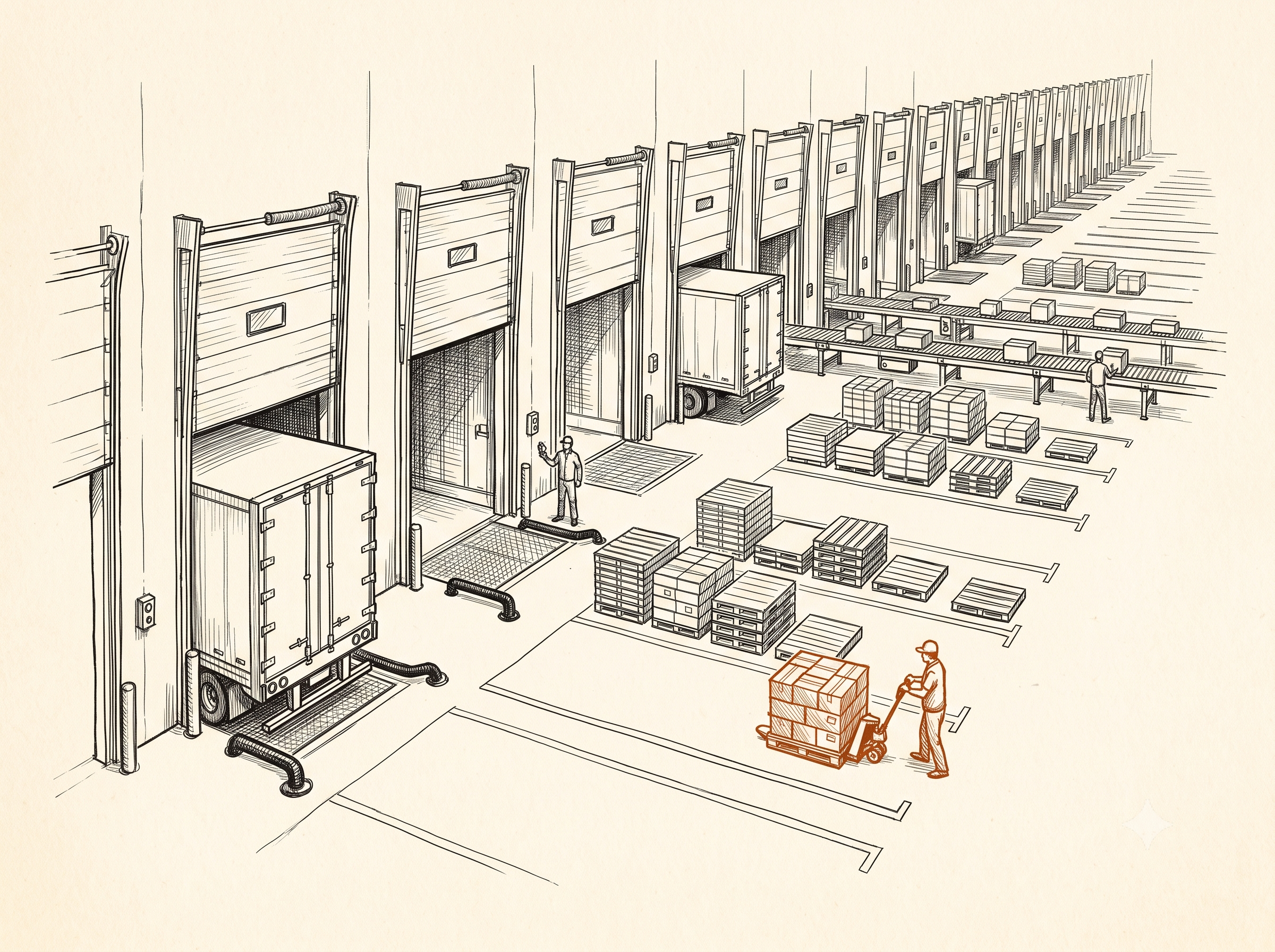
Where the constraint really sits between the receiving door and the outbound trailer, and what will move it, before spending to fix the wrong thing. The sorter that takes the blame for a backlog the staging lanes created. The picking stations added to a line that was already waiting on the conveyor that feeds it.
Staffing & scheduling

How many pickers, packers, and lift operators are needed, on which shifts, in which zones, to hold rate through peak and through a Monday that starts four people short. Labor is the largest controllable cost on most floors, and cross-training, shift structure, and break coverage decide whether the plan survives an ordinary bad week.

Routing & dispatch

How work moves through the building: slotting, pick paths, wave release timing, zone assignment, and which door a trailer gets when four of them arrive inside the same hour. Decisions remade every shift, and together they set how much the floor clears before the carrier cutoff.

Network & footprint

Which facility holds which SKUs, how much overflow goes to a 3PL, and whether the next building belongs where the volume is today or where it will be in five years. How much pressure a new site actually takes off the one already running at its limit, which is rarely the number the business case assumed.

Contingency & risk

What breaks when the sorter goes down mid-wave, an inbound container misses the vessel, a promotion lands a week early, or peak arrives ahead of the forecast, and what the response should be before it happens on the dock.

Why the current approach stalls out

The average day is the one day the warehouse never has.

Nothing above is a criticism of how buildings get run today. WMS reporting, labor standards, engineering judgment, and spreadsheets built over years hold the daily operation together, and they hold it well. The decisions on this page ask for something else. They ask what the building will do once you change something inside it, which is a separate question from what the building is doing now. Answering it means carrying the variability, the queuing, and the way receiving, putaway, picking, packing, and shipping push back on each other, which no rate calculation or layout drawing was ever built to carry.

Average out the day and you plan a building nobody works in. Trailers arrive early and late and sometimes not at all, jams cluster, absenteeism runs high the week after a holiday, and a promotion pulls three hundred SKUs into the fast lane at once. Throughput does not degrade smoothly while that stacks up. The floor absorbs it, absorbs it, and then the whole afternoon goes sideways in twenty minutes.

WHAT SIMWELL BUILDS

We build decision systems.

At the center of one is a working replica of your building, validated against the building itself and carrying the rules and the variability that a weekly report smooths flat: dock and yard arrivals as they land rather than as they were booked, putaway and replenishment logic, travel time down the pick path, conveyor and sortation behavior, equipment that goes down when it goes down, the way twenty minutes lost in one zone turns up later at the outbound cutoff. Options go through it, and you see where each one leads while the capital is still uncommitted.

A model settles the question in front of you. The system around it makes that repeatable, so the answer is waiting the next time the question comes back: the next automation phase, the next peak plan, the next client onboarded into the building. Your team runs it, reads the results, and makes the call. The work sits on top of the systems you run today, and the capability stays after the engagement closes.

PROOF

Decisions made on evidence, not conviction.

warehouse_cs1

CASE STUDY

Will the design clear the volume, or just the drawing?

A retailer sizing one of the largest warehouses in North America asked how many of its 50+ inbound dock doors it really needed. An AnyLogic model of the planned building found the doors were never the constraint. The main conveyor and staging couldn't clear inbound fast enough, and trucks queued in the yard. The conveyor system was redesigned before anything got built.

Read the case study
warehouse_cs2

CASE STUDY

The automation is in. Why are the pickers waiting?

Browns Shoes was losing picking productivity in its distribution center, and the four picking stations were where the loss showed up. An Arena model their own analyst runs put the options against each other before any got bought: more stations, a fourth OSR, shortcuts, a longer loop. The constraint sat in the conveyor loop feeding the stations.

Read the case study
warehouse_cs3

CASE STUDY

How much building will we need ten years from now?

A large apparel company had to turn a ten-year forecast into storage and throughput requirements. Simple projections missed what makes apparel hard: inventory landing in seasonal lumps, and slow stock holding space long after it stopped selling. A model runs a decade of the network in under 30 seconds. The capacity case was approved.

Read the case study

HOW ENGAGEMENTS BEGIN

One decision, bounded scope, sized to the window the decision actually has.

  1. 01

    Frame the decision.

    The single call you have to make, the options genuinely on the table, the limits that actually bind, and the measures the room will judge against. If a model won't help, you hear that here, before anyone scopes anything.

  2. 02

    Build and validate the model.

    The model gets sized to the decision and built from what you already hold. Clean master data is never the price of entry; a first pass runs on WMS order history, receiving appointments, and the pick rates your supervisors stand behind, and the build itself shows which of the remaining gaps are worth closing. Your engineers and floor supervisors check the logic while it takes shape, until the model queues, jams, and recovers the way the building does.

  3. 03

    Deliver the decision package.

    You get scenario results, trade-offs written down, assumptions stated in the open, and a model that stays with your team. Logic and assumptions are visible the whole way through, and results get read together rather than handed over as a verdict, so the recommendation you take into a capital committee holds up to line-by-line questioning.

WHY SIMWELL

Plenty of firms can build a model. Fewer can build one that holds up inside a real operation.

SimWell fields one of the deepest modeling benches anywhere, and a good number of those consultants worked inside distribution centers and fulfillment operations long before they modeled any. They understand why an automation case that clears every review can still miss its rate in week two of peak, and they build for that week. The warehousing knowledge runs from a single pick module up to multi-site networks moving thousands of SKUs, which is what keeps the model recognizable to the people who work the floor.

WHO THIS IS FOR

A decision this cycle where the downside is real.

A decision this cycle where the downside is real: an automation order that commits capital for a decade, a building sized to the wrong constraint, a service level promised on a rate the floor has never once hit. If a spreadsheet or a vendor's throughput study already lost this argument once, bring it here.

Discuss the decision

Bring one question. If modeling can support a defensible commitment, we'll show you the smallest scope that gets you there. If a model won't help, you'll hear that in the first call.

Start a conversation

RESOURCES

More on the decisions warehousing leaders own.

2025_04_EN_WA-22Q-Questions_Newsletter-Banner

EBOOK

Warehouse Simulation: 22 Questions to Ask Before You Start

The questions worth settling before the work starts, from defining the problem through who owns the model afterward.

Download the guide
How-to

EBOOK

How to Buy Warehouse Simulation: A Practical Guide for Capital and Operational Projects

How capital projects and operational projects differ in scope, budget, and evidence, and how to brief either one so it lands.

Download the guide
Warehouse simulation value eBook cover

EBOOK

How Warehouse Simulation Multiplies Value Across Layout, Labor, and Automation

Where a model earns its keep across racking, slotting, staffing, and automation, and what changes when the model stays.

Download the guide